
You have an event coming up, your outfit is ready, and you’re wondering whether a “Red Carpet Peel” will leave your skin polished or visibly irritated. The name can describe different glow-focused treatments, including laser facials, so the method matters more than the label. For skincare for red carpet events in Beverly Hills, plan around your skin’s needs and the event date.
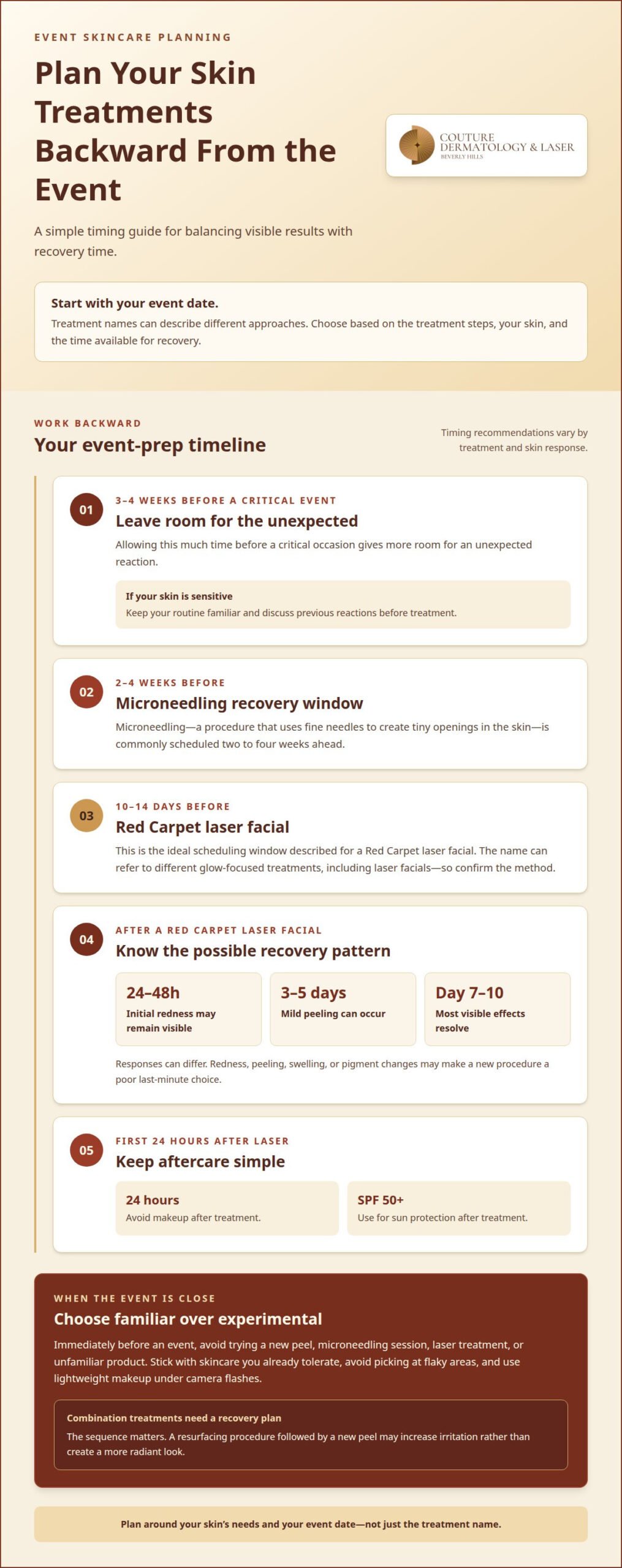
It’s understandable to want a fresh, camera-ready look without taking a last-minute risk. In my practice, I see patients who are balancing visible results with recovery time, especially when an event date is fixed. A Red Carpet laser facial is ideally scheduled 10 to 14 days before an event, while leaving 3 to 4 weeks before a critical occasion allows more room for an unexpected reaction.
This guide explains what a Red Carpet Peel may involve, how celebrity-inspired routines and glow products fit into event preparation, and what to consider when discussing treatments with a Beverly Hills dermatologist. The goal is a thoughtful plan tailored to your skin, not a last-minute change before the cameras.
Key Takeaways
- Learn how laser treatments and other event-preparation options can fit into a plan shaped around your skin and recovery needs.
- See why celebrity-inspired routines, including exfoliating peels, may need adapting rather than copying just before an event.
- Find out how to use light-reflecting products for a fresh-looking finish without making makeup feel heavy.
- Explore simple ways to maintain your skin between events, including how to approach exfoliation and post-treatment makeup.
- Understand how Beverly Hills dermatology expertise can help you weigh treatment options for your skin tone, concerns, and event schedule.
1. Combining laser treatment with other event-preparation services
In Beverly Hills, event preparation can include laser facials, chemical peels, microneedling (a procedure that uses fine needles to create tiny openings in the skin), injectables, and hydration-focused facials. The best fit depends on your concern, skin tone, sensitivity, and event date. Tell your clinician what you hope to address, such as redness, puffiness, or dullness, before discussing combinations. A plan for uneven skin texture may differ from one focused on temporary hydration.
Oxygen facials, HydraFacials, and LED treatments use different approaches. An oxygen facial uses oxygen-focused products, a HydraFacial combines cleansing and exfoliation with hydration, and LED uses light. For a last-minute appointment, a familiar, gentle facial is generally less disruptive than a procedure that may leave visible irritation. Choose based on the treatment steps, not just the service name.
For puffiness, a gentle cooling step may help reduce the appearance of swelling. Dullness may respond to a mild exfoliating facial, while persistent redness needs assessment before adding heat or exfoliation. Laser choice matters, too. CO2 lasers use carbon dioxide to create heat-related skin effects, while Er:YAG lasers use erbium energy to treat skin. CO2 lasers also carry a higher risk of hyperpigmentation, meaning darker patches caused by excess skin pigment, for people with darker skin types. For melasma (patches of darker skin), options may include the Fotona laser.
Peels, microneedling, and lasers can cause redness, peeling, swelling, or pigment changes. After a Red Carpet laser facial, initial redness may remain visible for 24 to 48 hours, and mild peeling can occur over 3 to 5 days. Most visible effects resolve by day 7 to 10. These effects can make a new procedure a poor last-minute choice.
How should you time treatments and prepare sensitive skin?
Plan backward from the event. A Red Carpet laser facial is ideally scheduled 10 to 14 days beforehand; leaving 3 to 4 weeks before a critical event allows more room for an unexpected reaction. Microneedling (a procedure that uses fine needles to create tiny openings in the skin) is commonly scheduled two to four weeks ahead. If your skin is sensitive, keep your routine familiar and discuss previous reactions before treatment.
Laser treatment can be combined with other services, but the sequence and recovery plan matter. A resurfacing procedure followed by a new peel, for example, may increase irritation rather than create a more radiant look. After a Red Carpet laser facial, avoid makeup for 24 hours and use SPF 50+ for sun protection.
Immediately before an event, avoid trying a new peel, microneedling session, laser treatment, or unfamiliar product. Even a familiar procedure can leave skin temporarily reactive. Stick with skincare you already tolerate, avoid picking at flaky areas, and use lightweight makeup under camera flashes. Keep last-minute preparation focused on a polished finish, not managing a surprise reaction.
2. Celebrity red-carpet skincare routines
A celebrity routine can spark ideas, but the useful question is why a step was chosen. Patients may be drawn to a famous peel or serum because they want a similar finish. Start with your own skin history: a routine designed for someone else may not suit your skin or event schedule.
Harold Lancer recommends a peel containing glycolic acid, retinol, and phytic acid a couple of nights before an event. Glycolic acid exfoliates by loosening dead surface cells. Retinol is a vitamin A ingredient that affects skin renewal, while phytic acid is used in some skincare formulas. This describes one routine, not a universal recipe.
Combining active ingredients can be more irritating than using a familiar product alone. If you haven’t used a peel with those ingredients before, don’t treat a celebrity’s timing as a reason to try one. Consider any history of stinging, dryness, or peeling, and keep your usual routine steady while deciding whether a new step makes sense.
Celebrity routines are often presented as polished sequences, but context matters. Someone may have used the same products for a long time or may have professional guidance shaping their choices. You rarely see adjustments made for sensitivity or the steps skipped when skin feels unsettled. Treat the visible routine as inspiration, not as a personalized plan.
How can you adapt a celebrity routine to your skin?
Start with one question: what are you hoping to change? If your concern is rough texture, a new exfoliating step may sound appealing, but a familiar routine gives you a clearer starting point. If your skin is already dry or reactive, adding several active ingredients together can make it harder to identify what caused discomfort.
Before trying a new product, introduce it on an ordinary day rather than just before a major event. Follow its directions, use a small amount, and watch for discomfort or visible irritation. Avoid changing several products at once. If a reaction appears, stop using the new product and return to skincare you know your skin tolerates.
In my practice, I help patients separate useful inspiration from steps that may not fit their skin. Bring the product names and your event date to a discussion, so the plan can account for both. If you’d like to talk through your routine, you can book an appointment online.
3. Hydration and glow-focused products
For a comfortable-looking finish, choose hydration products by what they do, not by claims on the bottle. Humectants, such as glycerin, attract water to the outer layer of skin. Emollients soften dry, rough patches, while occlusive ingredients form a surface layer that slows water loss. A product may combine more than one type.
Check the ingredient list if your skin tends to feel tight after cleansing. Glycerin is a familiar humectant; ceramides are fats that help support the skin’s protective barrier. You don’t need every ingredient category in one formula. Choose based on how your skin feels and whether the product leaves it comfortable, rather than relying on a “glow” claim.
Application order can affect how products sit. After cleansing, apply a water-based hydrating serum first, then moisturizer if your skin needs it. Use a small amount and spread it evenly, including around the sides of the nose and along the jaw. If a layer feels tacky, let it settle before applying the next product.
Dry patches can catch the light unevenly and make skin look less luminous. Rather than scrubbing them, apply moisturizer gently and let it soften the surface. If makeup tends to cling to a particular patch, avoid rubbing it, as pressure can make the area look more irritated. Adjusting the skincare underneath may create a smoother base.
Consider the finish you want from each product. A gel moisturizer may feel lighter, while a cream may feel more cushioning on dry areas. Apply a thin layer across your face, then add a little more only where skin feels dry. This targeted approach helps avoid an unnecessarily heavy feel.
Introduce new products thoughtfully, especially before an important appearance. Try one change at a time as part of your usual routine, so you can tell which product agrees with your skin. If a formula causes persistent stinging or visible irritation, stop using it and return to products you tolerate.
For skincare for red carpet events in Beverly Hills, a glow-focused routine can be simple: cleanse gently, apply hydration suited to your skin, and use moisturizer where needed. Pay attention to comfort and how the layers feel once they settle. A polished look starts with products that work well together, not a crowded lineup.
For a natural glow, mix a light-reflecting enhancer liquid into moisturizer; for more noticeable luminosity, add it to foundation. Choose the placement based on how visible you want the effect, and keep the rest of your routine aligned with the comfortable finish you prefer. This lets you tailor the look without changing hydration steps that already suit your skin.
When deciding, consider whether you want the glow to look subtle or stand out. Use the moisturizer option for a natural effect, or the foundation option for more noticeable luminosity. Assess the overall finish before adding anything else.
4. Maintaining skin between events
Between events, keep your routine consistent instead of rebuilding it for every red carpet. Choose a gentle cleanser, a moisturizer you already tolerate, and sunscreen each morning. Apply sunscreen 15 minutes before sun exposure. That familiar sequence makes it easier to notice whether a new product, rather than your regular routine, changes your skin’s appearance.
Active ingredients need a measured approach. If tretinoin, a prescription retinoid, or vitamin A-based ingredient that supports skin renewal, is already part of your routine, cleanse first and wait 20 minutes before applying it. Don’t add another exfoliant on the same night without a reason. For example, alternating a retinoid night with a gentle cleansing-and-moisturizing night keeps your routine easier to follow.
Skin can look dull when makeup, sunscreen, and daily buildup aren’t fully removed. At night, cleanse along the hairline, around the nose, and beneath the jaw before applying moisturizer. If your skin feels tight after washing, switch to a gentler cleanser rather than scrubbing harder. A comfortable finish is a better guide than a squeaky-clean sensation.
Treat exfoliation as a planned part of your routine, not a rescue step before every event. Shani Darden recommends chemical exfoliation one to two times a week, depending on skin type and other products. Keep that frequency steady rather than increasing it before photographs. If flaking or stinging appears, pause exfoliation and return to gentle cleansing and moisturizer.
Track what your skin tolerates. Note the product, application order, and any reaction in a simple routine log. For example, if a new serum irritates your cheeks, stop using it and avoid adding another active ingredient while your skin settles. This record can also help a dermatologist understand which products you use between events.
Between professional treatments, protect your skin barrier by avoiding unnecessary changes. Don’t combine a new scrub, peel, and retinoid in one evening. If you’re preparing for another event, introduce any routine change well ahead of it, then keep the final days simple. Healthy-looking skin often benefits more from consistency than a crowded shelf.
Think of youthful-looking skin as a long-term routine, not a one-night finish. Use moisturizer when skin feels dry, apply sunscreen before going outdoors, and remove makeup gently at day’s end. If a persistent concern, such as uneven tone or irritation, keeps returning between events, bring your routine and product list to a dermatologist for a tailored plan.
5. Beverly Hills estheticians and dermatologists
Planning skincare for red carpet events in Beverly Hills starts with your skin concern, event date, and treatment history. A facial, medical treatment, or procedure can involve different preparation and recovery needs. A dermatologist can use those details to shape a plan around the look you want and the time available, rather than choosing a treatment simply because it sounds event-ready.
Beverly Hills spas may offer celebrity-inspired or event-ready facials, but the phrase “event-ready facial” describes an intended result, not a standardized treatment. A facial may focus on cleansing, exfoliation, or hydration, so its steps and possible visible effects depend on what it involves.
An esthetician may provide a facial focused on the skin’s surface and a refreshed appearance. A dermatologist can assess persistent redness, skin symptoms, and questions about medical procedures. If a concern involves an ongoing condition or you’re considering a laser or injectable treatment, a dermatologist can discuss the medical and cosmetic factors involved.
For a personalized appointment, bring your event date, current product list, and a clear description of what you’d like to improve. Mention past irritation, sensitivity, or pigment changes. These details help inform preparation and the choice of approach. For example, a history of redness may call for a different plan than a concern about uneven tone.
Timing should shape the conversation. A gentle facial may suit a different schedule than a procedure that can cause visible healing. Your dermatologist can consider the treatment, your skin history, and the time you have before makeup or photography. The aim is thoughtful planning, not compressing every possible treatment into the days before an event.
Good skincare for red carpet events in Beverly Hills is tailored to you, not copied from a celebrity routine. If you’re choosing between a facial and a medical procedure, start by naming your priority: comfort, a refreshed appearance, or help with a persistent concern. This gives the conversation a practical direction and keeps the plan focused on your goals.
If you’d like to talk through your event preparation and skin goals, book an appointment online. We can discuss which options fit the concern you want to address and how your event schedule affects the plan.
Couture Dermatology & Laser Beverly Hills
Couture Dermatology & Laser in Beverly Hills can shape event preparation around your skin concerns, treatment history, and calendar. Dr. Karen “Chinonso” Kagha Abisogun, a Harvard-trained, board-certified dermatologist, leads the practice. Together, you can discuss whether Laser & Light-Based Treatments, including Laser Resurfacing, or injectables such as Botox and Dermal & Lip Fillers fit your goals.
That conversation is valuable if you’re weighing a procedure close to an event, managing uneven tone, or hoping to refine skin texture. The right plan is tailored to your needs, not built around a celebrity routine or a treatment name.
To discuss your event skincare goals, contact Couture Dermatology & Laser in Beverly Hills.
Plan for the Skin You Want to Feel Confident In
Your next step is to set an event date and decide what you’d like your skin to feel and look like. Is your priority a smoother appearance, a more even tone, or simply feeling comfortable without heavy makeup? Bringing those goals into a conversation makes it easier to tailor skincare for red carpet events in Beverly Hills to your preferences, skin history, and schedule.
In my practice, I encourage you to think beyond the final photograph. A considered plan should make sense for your everyday routine, too, so you can feel at ease before the event and afterward. You don’t need to recreate a celebrity’s regimen to feel polished. Your own skin goals are a better place to begin.
When you’re ready to talk through your priorities, book a visit with Couture Dermatology & Laser Beverly Hills. We can discuss an approach that feels thoughtfully tailored to you. Your preparation can begin with a clear plan and a little more confidence.
Frequently Asked Questions
What is the Red Carpet Peel?
The Red Carpet Peel is a name used for event-focused skin treatments intended to create a fresher-looking complexion. It may describe a chemical peel or a laser-based facial, so the name alone doesn’t tell you which method is involved. Before choosing a treatment, clarify its type and how it fits your skin goals. The distinction matters because the approach, visible effects, and recovery can differ.
How far in advance should you get a facial before a red carpet event?
Schedule a facial with enough time to see how your skin responds before the event. The right lead time depends on the facial’s ingredients, exfoliation level, and your history with similar treatments. A familiar, gentle facial may fit closer to the event than a new or more intensive treatment. If you’re considering a procedure rather than a basic facial, plan around its expected recovery with your dermatologist.
What is a recommended skincare timeline for the week before an event?
Early in the week, keep your usual routine and avoid testing unfamiliar products. As the event approaches, focus on gentle cleansing, moisturizing, and using sunscreen during the day. Test makeup when you can see how it layers over your skincare. On event day, use products you already tolerate and apply them lightly where makeup tends to collect or look heavy.
Are there same-day red carpet facial services in Beverly Hills?
Same-day facial appointments may be available in Beverly Hills, but schedules and treatment choices vary. A facial doesn’t necessarily create a dramatic or lasting change before an event. If you’re getting ready that day, favor familiar skincare and makeup rather than adding a new treatment to your routine. This keeps preparation focused on a finish you already know works for your skin.