
You wash your hair, but the itching and flakes return, and redness along your hairline leaves you wondering whether it’s dandruff or something else. In my practice, I assess where the scale appears, how your scalp feels, and your medical history before discussing seborrheic dermatitis scalp treatment in Los Angeles. Flakes alone usually don’t tell me enough to identify the cause.
I see patients who feel frustrated when a shampoo helps briefly but the irritation returns. I also look for patterns that may suggest another condition, such as psoriasis or a reaction to a hair product.
Here, I’ll explain how I distinguish these conditions, which approaches may calm inflammation, and how to soften scale without aggravating your scalp. Hair-care habits and hair texture can shape a practical treatment plan, too. If your symptoms persist, I recommend a closer evaluation.
Key Takeaways
- A dermatologist typically diagnoses seborrheic dermatitis by examining your scalp and reviewing your medical history, while considering other causes of flaking.
- Treatment may combine antifungal options to address yeast with anti-inflammatory medication to ease redness and itching.
- In my practice, I advise patients with scalp flaking to use medicated shampoo as directed and leave it on their scalp for a few minutes before rinsing; washing frequency can depend on your hair texture.
- Soften scale before loosening it, and avoid picking or scratching, which can further irritate your scalp.
- Notice where symptoms appear and whether they persist or worsen; those details can help distinguish seborrheic dermatitis from psoriasis or a reaction to hair products.
How do dermatologists diagnose seborrheic dermatitis?
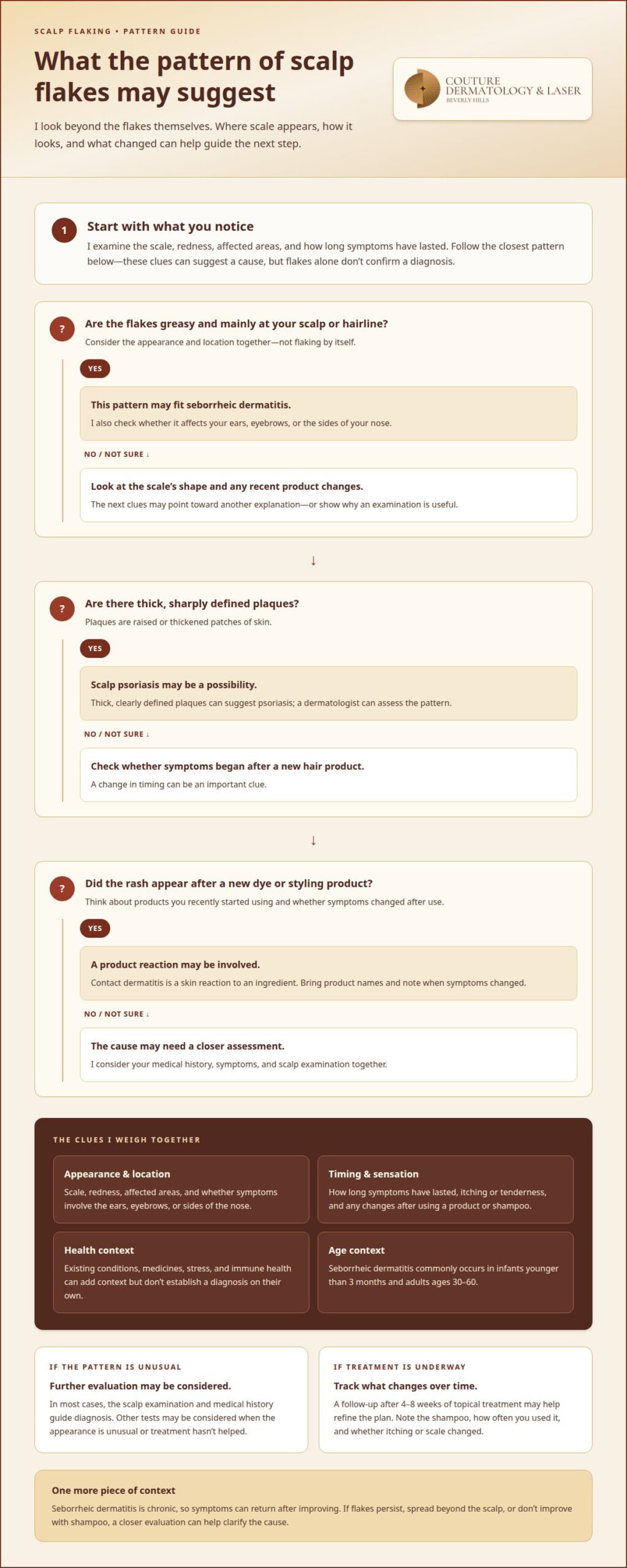
In my practice, I diagnose seborrheic dermatitis by examining your scalp and reviewing your medical history. I look at the scale, redness, affected areas, and how long symptoms have lasted. Greasy flakes at the scalp and hairline may fit seborrheic dermatitis, while thick, sharply defined plaques can suggest scalp psoriasis. The pattern matters as much as the flaking itself.
I ask about itching, tenderness, hair products, and shampoos you’ve tried. Bring product names and note whether symptoms changed after use. I often see a rash that follows a new dye or styling product, which may point to contact dermatitis, a skin reaction to an ingredient. I also check whether seborrheic dermatitis affects your ears, eyebrows, or the sides of your nose.
Age and health history add context, but they don’t establish a diagnosis by themselves. Seborrheic dermatitis commonly occurs in infants younger than 3 months and adults ages 30-60. I ask about existing conditions, medicines, stress, and immune health, too. In most cases, the skin examination and history guide my diagnosis; I may consider other tests when the appearance is unusual or treatment hasn’t helped.
Treatment aims to reduce scale, itching, and inflammation, then manage symptoms over time. Seborrheic dermatitis is chronic, so symptoms can return after improving. Based on what I see, I may recommend dandruff shampoos containing ketoconazole, selenium sulfide, or another active ingredient. For persistent inflammation, prescription options can include corticosteroids or calcineurin inhibitors, medicines that calm the skin’s immune response.
How much does a dermatologist visit for seborrheic dermatitis cost in Los Angeles? There isn’t one standard visit price. The amount depends on the clinic, your coverage, and the care involved. Ask about the visit fee and insurance billing before scheduling, as these details vary.
Do Los Angeles dermatologists accept insurance for seborrheic dermatitis treatment? Insurance participation and coverage depend on the plan and the care provided. Review your plan’s benefits and participating-provider information to understand your potential out-of-pocket costs.
Which Los Angeles dermatology clinics treat scalp seborrheic dermatitis? Dermatology clinics that evaluate medical skin conditions can assess scalp symptoms and develop a treatment plan. Make an appointment with a dermatologist if flakes persist, spread beyond the scalp, or don’t improve with shampoo.
Follow-up helps me refine your long-term management. I may reassess your response after four to eight weeks of topical treatment, then adjust the maintenance approach based on any remaining scale and irritation. Note which shampoo you used, how often you used it, and whether itching changed. In my experience, these details can help distinguish an ineffective product from a diagnosis that needs reconsideration.
Corticosteroids and other anti-inflammatory treatments
Anti-inflammatory medicines can ease redness and itching when scalp irritation is active. When I see patients for seborrheic dermatitis in our Los Angeles practice, I consider whether inflammation, yeast-related activity, or both need attention. In my experience, that helps me shape a plan around your symptoms instead of relying on one product for every concern.
Topical Corticosteroid Use
Topical corticosteroids are medicines you apply to skin to reduce inflammation, redness, and itching. I may prescribe one for an inflamed scalp, often alongside treatment that addresses yeast-related activity. The goal is to calm active symptoms while keeping use appropriately limited. Follow the prescribed amount and duration, and don’t extend treatment on your own if symptoms return.
Other Anti-Inflammatory Therapies
Calcineurin inhibitors are prescription medicines that calm the skin’s immune response. Options such as tacrolimus or pimecrolimus may be considered when inflammation needs control and another approach is appropriate. Studies found less seborrheic dermatitis within 2 weeks of treatment with calcineurin inhibitors applied to skin. They address inflammation, while antifungal medicines target yeast-related activity.
Roflumilast is another prescription treatment option. The FDA-approved treatment applied to skin is indicated for seborrheic dermatitis in people 9 years of age and older. Prescription antifungals, including ketoconazole or ciclopirox, may also be considered. In my practice, I choose or adjust these options based on your scalp findings and how you’ve responded to previous care.
Treatment Benefits and Risks
What are the risks and side effects of scalp seborrheic dermatitis treatments? Using prescription-strength corticosteroids for many weeks or months without a break can cause skin thinning or loss of skin color. Other medicines may irritate the skin. Tell your dermatologist if you notice burning, worsening redness, or a new rash, so the treatment plan can be reviewed.
What are the best treatments for seborrheic dermatitis on the scalp? The best approach depends on whether scale, yeast-related activity, or inflammation is most prominent. A dermatologist may combine an antifungal shampoo or medicine with corticosteroid treatment, then adjust the plan as symptoms change.
Keep a simple record of the medicine you use, how often you use it, and changes in itching or redness. That information can help your dermatologist assess benefits and side effects at follow-up. If inflammation persists despite treatment, you can book an evaluation to discuss medical dermatology care and a tailored next step.
Scalp dermatitis symptoms and warning signs
You may notice itching before flakes become obvious, or see scale along your hairline after washing. Seborrheic dermatitis can cause red patches, greasy scales, and flaking; on the scalp, it’s often called dandruff in adolescents and adults. In my practice, I see patients with symptoms around the ears, eyebrows, or sides of the nose, too. Noticing which areas are affected gives useful context.
Visible flakes are only part of the picture. Excess sebum, the skin’s natural oil, can contribute to an imbalance of Malassezia, a yeast that naturally lives on the skin. In excess, it may contribute to inflammation and itching. I often see patients with an oily scalp that feels irritated even when it doesn’t look very dry.
Stress, cold or dry weather, hormonal changes, and harsh ingredients in soaps or detergents may trigger flare-ups. Note whether symptoms worsen after a stressful period, a weather change, or a new hair product. This record can help distinguish a recurring seborrheic dermatitis pattern from irritation linked to a specific exposure.
Notice where symptoms appear and how they develop. Scale on the scalp, eyebrows, and sides of the nose may fit seborrheic dermatitis, while symptoms that start after using a new dye or styling product may suggest a contact reaction. Thick, clearly outlined plaques can point to another possibility, such as scalp psoriasis. These clues guide evaluation but don’t confirm a diagnosis on their own.
Treatment choices depend on the symptoms and areas involved. Dandruff shampoos may target scalp scale, while creams or ointments may suit affected skin outside the hair-bearing scalp. For inflammation, prescription options can include pimecrolimus, a calcineurin inhibitor that calms the skin’s immune response. The choice depends on the location and appearance, not simply on how many flakes you see.
Symptoms that persist despite several weeks of over-the-counter treatment deserve a fresh assessment. In my practice, I reassess whether the pattern fits seborrheic dermatitis or another scalp condition, then adjust the treatment plan. Bring the names of shampoos and other products you’ve used, and describe how often you used them. This can help explain why the approach did or didn’t help.
Hair shedding can be worrying when your scalp is inflamed. Hair may grow back after inflammation associated with seborrheic dermatitis is treated. If you notice shedding alongside persistent scalp irritation, mention both symptoms during your evaluation. This helps your dermatologist assess your scalp and decide whether another cause needs attention.
Scalp scale removal and hair-care habits
In my practice, I advise patients to soften scale rather than remove it by force. Shampoo choice and washing frequency also depend on your hair texture and scalp sensitivity.
Removing Scalp Scale
Scale removal means loosening flakes gently before washing, rather than scraping them from your scalp. For stubborn scale, mineral oil, peanut oil, or olive oil can soften it when left on the scalp for 1 to 3 hours. Then wash gently and let loosened flakes rinse away. Picking or forceful scrubbing can irritate already inflamed skin.
Hair texture affects how often medicated shampoo may be practical. I may suggest washing 2 to 3 times a week for straight or wavy hair, and once a week for curly or tightly coiled hair. If you have tightly coiled or chemically treated hair, ketoconazole may increase dryness or breakage risk; use it once a week with moisturizing conditioner as advised.
Gentle Self-Care During Treatment
Gentle self-care means cleansing irritated skin without adding friction or harsh ingredients. Choose fragrance-free, non-irritating products for daily cleansing, and avoid scratching when itching flares. Harsh soap or detergent ingredients can trigger symptoms, so review products that touch your scalp and hairline. Keeping a simple record of new products and symptom changes can help identify a pattern.
Don’t pull flakes from your scalp with a comb or fingernails. Salicylic acid can soften scale, but evidence for using it alone to treat seborrheic dermatitis is limited. If you also have eczema or a sensitive scalp, mention it during a dermatology evaluation. Irritation from an added product can complicate your routine.
Medicated Shampoo Use
Medicated shampoos may contain ketoconazole, selenium sulfide, pyrithione zinc, or salicylic acid. They can reduce dandruff and relieve scalp symptoms, but the active ingredient and schedule should suit your hair and symptoms. Leave the shampoo on your scalp for a few minutes before rinsing. After symptoms clear, using a medicated shampoo once a week or once every two weeks may help prevent relapse.
Which medicated shampoos treat scalp seborrheic dermatitis, and how often should they be used? Ketoconazole, selenium sulfide, pyrithione zinc, and salicylic acid shampoos are used. Frequency varies: dermatologists may recommend 2 to 3 times a week for straight or wavy hair, and once weekly for curly or tightly coiled hair.
Cradle cap calls for a gentler routine than adult scalp scale. For an infant, wash with mild baby shampoo once a day. If scaling persists, apply mineral oil or olive oil for an hour or two before washing. Avoid picking at the flakes, which can irritate the baby’s scalp.
How can I find a dermatologist for scalp seborrheic dermatitis near me in Los Angeles? Look for a Los Angeles dermatologist who evaluates medical scalp conditions and persistent flaking. Arrange an evaluation if over-the-counter treatment hasn’t significantly improved symptoms after several weeks, or if itching and irritation are worsening.
How seborrheic dermatitis differs from other scalp conditions
Flakes alone don’t tell me what’s causing them. In my practice, I compare their appearance and location with your symptom history, product use, and response to treatment. Seborrheic dermatitis often affects the scalp, ears, eyebrows, and sides of the nose. When I see symptoms in several of these areas, that can help distinguish it from a scalp-only concern, but it doesn’t confirm the diagnosis by itself.
Scalp psoriasis is an important comparison because both conditions can cause scale and irritation. Scalp psoriasis affects approximately 45 to 56 percent of people with psoriasis. I ask whether you have psoriasis elsewhere and examine how the scalp patches look and where they extend. If the pattern is unclear, a treatment that helped before may offer context, but it can’t replace an examination.
Contact dermatitis is another possibility, especially if symptoms began after a new hair dye, shampoo, or styling product. Allergic contact dermatitis symptoms may begin 24 to 96 hours after exposure. That delay can make the trigger hard to spot. Note the product and the first day symptoms appeared; this timeline gives me a useful clue about a possible reaction.
Eczema can also cause an itchy, irritated scalp, so I look at the surrounding skin and ask about your history. Tell me whether you’ve had eczema elsewhere or noticed a connection with a particular product. Seborrheic dermatitis is linked with excess sebum, or skin oil, which can contribute to scalp irritation. In my practice, these details help me distinguish overlapping symptoms instead of relying on flakes alone.
Your response to treatment can provide useful information, but one medicated shampoo isn’t a complete diagnostic test. Salicylic acid, for example, can soften scale, yet evidence for using it alone to treat seborrheic dermatitis is limited. Prescription treatment may target inflammation or yeast-related activity. Tacrolimus, a calcineurin inhibitor (a medicine that calms inflammation), is one option I may consider.
Look for patterns, not a single “tell.” Record where symptoms appear, when they began, and whether a new product came first. Bring that timeline and the names of shampoos or prescription medicines to your appointment. If symptoms persist despite a reasonable treatment plan, ask me to reassess the diagnosis rather than simply adding another product.
An effective treatment starts with identifying the condition being treated. Seborrheic dermatitis, psoriasis, eczema, and contact dermatitis can look similar, yet their care may differ. I can examine your scalp and use your history to refine the diagnosis. If the cause remains uncertain or symptoms continue, schedule a dermatology evaluation to discuss the next step.
Couture Dermatology & Laser Beverly Hills: Laser Treatment
At our Beverly Hills practice, I evaluate skin concerns that need medical attention. If your scalp keeps itching or flaking despite a careful shampoo routine, I can assess whether seborrheic dermatitis or another condition may be involved and help you decide what to do next.
Laser treatment is separate from the medicated shampoos and prescription medicines commonly used for scalp seborrheic dermatitis. In my practice, the right approach depends on the diagnosis and the area being treated. A focused evaluation can help you understand which options may suit your concern, rather than assuming a laser is the answer for scalp scale.
If you’d like to discuss your skin concern, contact our practice.
Choose a next step that fits your routine
When patients come to me with a recurring scalp concern, I ask what they most want to address: persistent itching, visible scale, or uncertainty about the diagnosis. In my practice, starting with that priority helps us focus on your options and what ongoing care may involve. Before your next evaluation, note which symptom is bothering you most.
If you’re considering seborrheic dermatitis scalp treatment in Los Angeles, I’ll help you choose an approach centered on your scalp symptoms rather than a cosmetic procedure. Laser skin resurfacing and Botox injections address different concerns; they aren’t treatments for seborrheic dermatitis. The next step is a thoughtful discussion about your skin concern and the care that may suit it.
If you’re ready to discuss your concerns, contact Couture Dermatology & Laser Beverly Hills. In my experience, a clear starting point can help you move forward with greater confidence.
Frequently Asked Questions
Can Lifestyle Changes Be an Effective Treatment?
Lifestyle changes may help reduce flare triggers, but they don’t replace medical treatment when symptoms persist. If you notice flares during stressful periods, consider a stress-management practice such as meditation, yoga, or regular exercise. Keep a brief record of stress, weather, and symptoms to spot patterns. Reducing alcohol or refined sugars may benefit some people, though these changes aren’t a guaranteed way to control scalp symptoms. In my practice, I review these patterns with patients whose flares keep returning.
Is Scalp Dermatitis Dangerous?
Seborrheic dermatitis isn’t contagious or life-threatening, though persistent itching and visible flakes can affect comfort and confidence. It’s a chronic condition, so symptoms may ease and return over time. The important thing is to identify the scalp problem correctly, since psoriasis, eczema, and reactions to hair products can look similar. I reassess the diagnosis when a patient’s symptoms don’t fit the expected pattern. If your symptoms don’t fit your usual pattern, seek a dermatologist’s assessment rather than assuming the cause.
When Should You Be Concerned?
Pay attention if symptoms continue despite your current treatment, spread to other areas, or leave you unsure whether the original diagnosis fits. Mention any new reaction after changing hair dye, shampoo, or styling products. Don’t extend prescription corticosteroid use on your own, since prolonged use can cause skin thinning or loss of skin color. Share any changes with your dermatologist. In my practice, I review the diagnosis and treatment when symptoms persist.
When Should You Get Your Scalp Evaluated?
Arrange an evaluation if you’re unsure what’s causing the flakes or symptoms keep returning despite a consistent care routine. Before your visit, write down the products and medicines you’ve tried and what happened after each one. Include changes beyond the scalp, such as irritation around your ears or eyebrows. This concise history can help your dermatologist assess the pattern and decide whether the diagnosis or treatment approach needs revisiting. I often use that history to guide what we reassess.
When should scalp seborrheic dermatitis be treated by a dermatologist?
See a dermatologist when over-the-counter care hasn’t significantly improved your symptoms after several weeks, or when irritation keeps disrupting your routine. An appointment can be especially useful if you’re repeatedly switching shampoos without knowing whether you have seborrheic dermatitis. In my practice, I examine the scalp and reconsider other possible causes when patients haven’t improved. A dermatologist can examine your scalp, consider other possible causes, and determine whether prescription care is appropriate, rather than leaving you to continue trial and error.
What prescription treatments are available for severe scalp seborrheic dermatitis?
Prescription options can include antifungal medicines, stronger corticosteroids, and calcineurin inhibitors such as tacrolimus or pimecrolimus. Roflumilast is another prescription option for seborrheic dermatitis. These medicines work in different ways: some target yeast-related activity, while others reduce inflammation. In my practice, I choose an approach based on your scalp findings and response to previous treatment, then reassess if irritation or other side effects occur.
What home-care steps help prevent scalp seborrheic dermatitis flare-ups?
Keep your care routine gentle and consistent. Use fragrance-free, non-irritating products, avoid scratching, and soften stubborn scale instead of scraping it away. Once symptoms improve, follow the maintenance shampoo schedule recommended for you rather than stopping abruptly or using it more often without guidance. Tracking flare-ups alongside stress, dry weather, and new hair products can also help you recognize personal triggers and discuss them at follow-up. I often review that routine with patients when symptoms return.
Which Los Angeles dermatology clinics treat scalp seborrheic dermatitis?
Dermatology clinics that evaluate medical skin conditions can assess scalp symptoms and develop a treatment plan. In my practice, I assess persistent or spreading flakes and review what shampoo care you’ve tried. See a dermatologist if flakes persist, spread beyond the scalp, or don’t improve with shampoo.