Keloids are raised, firm scars that grow beyond the original wound, and they can follow acne, piercings, surgery, burns, or even minor skin injuries. For people considering keloid scar treatment for dark skin in Los Angeles, options may include corticosteroid injections to soften and flatten the scar, silicone sheets to help reduce thickness and itching, or a combination tailored to the scar’s features. In darker skin, injections can sometimes leave a lighter spot, so that possibility belongs in the treatment conversation.
It’s understandable to want a clear plan, especially when a scar is growing, itchy, tender, or drawing your attention every day. At Couture Dermatology & Laser in Beverly Hills, I assess how the scar developed, where it sits, how it feels, and whether it’s changing before discussing an approach. The right next step is often a careful evaluation, not a one-size-fits-all procedure.
Here, you’ll learn how to recognize keloids, what injections and silicone sheets may do, and how aftercare can support treatment planning. You’ll also see why recurrence matters and what to discuss during a consultation, so you can make your next decision with more clarity.
Key Takeaways
- A keloid can extend beyond the original injury and may grow over time, so notice whether a raised scar is changing or causing discomfort.
- Corticosteroid injections may soften and flatten a keloid, but discuss the possibility of lighter spots in treated areas of darker skin.
- Silicone sheets may help reduce raisedness and itching; follow guidance on how to wear them as part of your care plan.
- Laser therapy may improve redness or raised texture, and it may be used alongside other approaches.
- Keloids can return after treatment. A consultation can help shape an aftercare plan around the scar’s location, symptoms, and history.
What are Keloid Scars?
A keloid is a thick, firm scar that grows beyond the edges of the original wound. Excess collagen, a structural protein in scar tissue, builds up during healing and can create a raised growth that stays the same size or gradually enlarges.
Keloids may follow acne, surgery, piercings, burns, cuts, or minor skin trauma. They’re more common in people with darker skin tones and may run in families. Itching, tenderness, discomfort, or changes in appearance can make a scar worth assessing.
To hear a Los Angeles surgeon discuss keloid management, watch this UCLA Health conversation:
A dermatologist usually recognizes a keloid by examining its shape, texture, and growth beyond the injury. A biopsy, which takes a small tissue sample, may rarely be used to rule out another skin growth. Note when the scar appeared, what caused it, and whether it has changed or become itchy.
Treatment approaches work differently. Corticosteroid injections can soften and flatten raised tissue and ease symptoms, while cryotherapy freezes the scar and may lighten surrounding brown or black skin. Laser therapy may reduce redness or flatten raised tissue, often alongside another treatment. Surgery removes tissue but carries a risk of recurrence.
Laser resurfacing can improve an uneven scar surface, while other laser types may target redness. Pulsed dye and CO2 lasers are distinct approaches, and the choice depends on the scar feature being treated. Palomar Icon fractional skin resurfacing is a named laser platform, but its name alone doesn’t establish that it is suitable for a keloid. Ask what scar feature the proposed laser is intended to address.
Laser treatment may improve a keloid’s appearance, but it doesn’t remove the cause of excess scar growth. For dark skin, discuss pigment changes as well as texture before treatment. A practical step is to photograph the scar in consistent lighting before starting, so you can track changes in redness, height, and width.
There’s no single Los Angeles fee: treatment cost depends on the scar and the approach, with a quote provided after a request. Insurance coverage depends on plan terms and the reason for treatment, so review the benefits that apply to your care.
For keloid care in Los Angeles, relevant specialists include dermatologists experienced with keloids and skin of color. A plastic surgeon may be involved when surgical removal is considered. The number of sessions varies by method and scar response: injections often involve multiple visits, and cryosurgery may require three or more treatments for the best results.
Corticosteroid injections
Corticosteroid injections can soften and flatten raised keloid tissue and ease itching or tenderness. Other options include silicone sheets, cryotherapy, laser therapy, and, in selected cases, surgery. At Couture Dermatology & Laser Beverly Hills, I consider the scar’s location and symptoms before discussing treatment, then explain what changes to monitor. For keloid scar treatment for dark skin in Los Angeles, pigment changes also belong in that conversation.
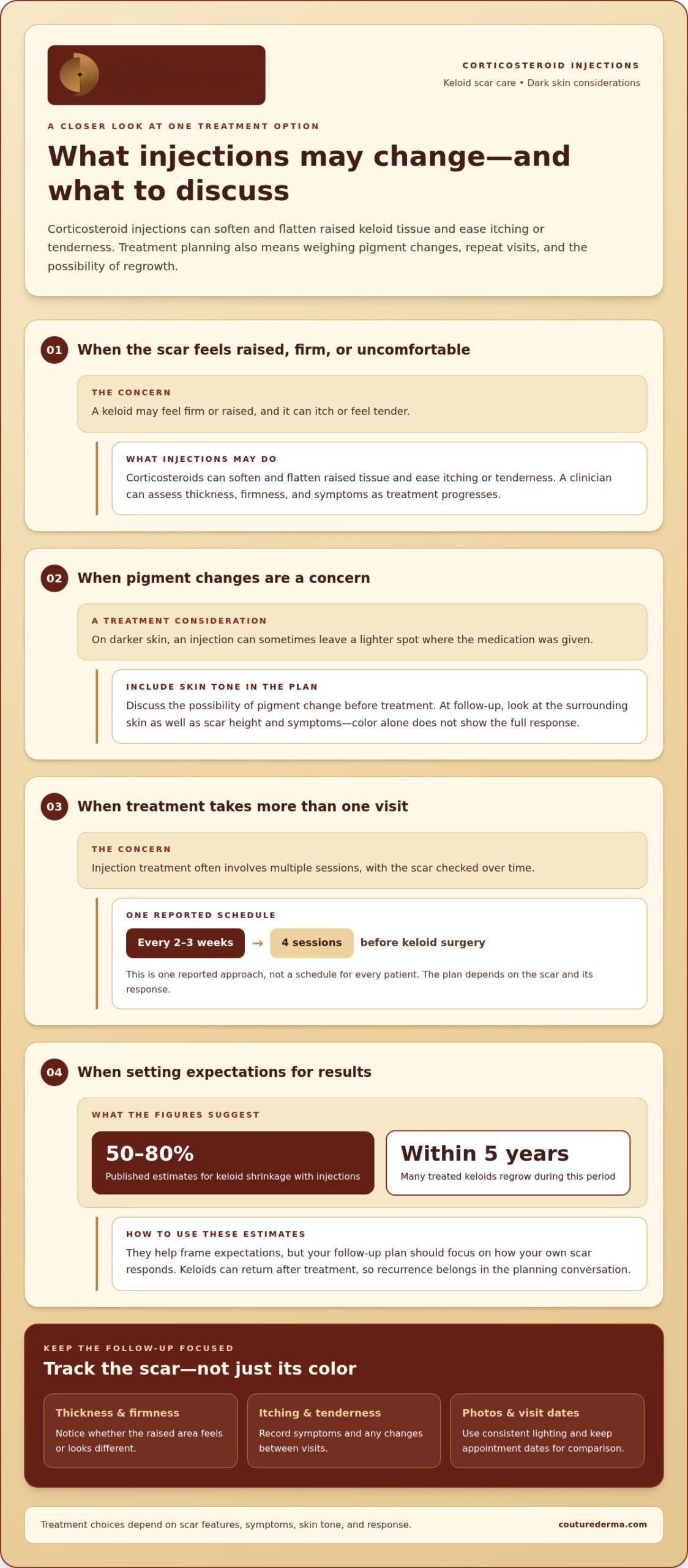
Injections reduce inflammation and scar activity within the raised area. Treatment often involves multiple sessions, with the clinician checking thickness, firmness, and symptoms over time. Published estimates indicate injections shrink 50% to 80% of keloids, although many treated keloids regrow within five years. Those figures help set expectations, but your follow-up plan should focus on how your own scar responds.
What should you know about Kenalog and skin tone?
Kenalog is a name you may hear when corticosteroid injections are discussed. Ask which medication is planned, where it will be injected, and what the clinician will assess at follow-up. A useful visit includes both a symptom check and an examination of the surrounding skin, especially if pigment changes would concern you.
For darker skin, corticosteroid injections can cause a lighter spot where the medication is given. Before treatment, ask how that possibility will be considered for your scar and skin tone. Take a clear photo in ordinary lighting, then compare it with the area at follow-up. Also note any new tenderness or itching, rather than judging progress from color alone.
Schedules vary with the treatment plan. Some patients receive corticosteroid injections every 2 to 3 weeks for four sessions before keloid surgery. This is one reported approach, not a schedule for every patient. Keep the dates of your appointments and note whether the scar feels softer or less uncomfortable between visits. That record can help guide the next discussion.
Are collagen injections used for keloids?
Collagen injections are used for depressed scars, which sit below the surrounding skin, rather than raised keloids. UCLA Health describes them as an immediate but nonpermanent option for depressed scars that may need repeating. If an injection is proposed, clarify whether the goal is to address a raised keloid or a separate indentation, since those concerns call for different plans.
For keloid scar treatment for dark skin in Los Angeles, bring a list of prior scar procedures and any pigment changes you noticed. Ask how progress will be measured and what would prompt a change in the plan. A tailored discussion can account for your symptoms, skin tone, and treatment history. To discuss an individualized medical dermatology approach, request an appointment online.
Silicone gel sheets for keloid and hypertrophic scars
Silicone gel sheets are a noninvasive option for raised scars, including keloids and hypertrophic scars. They may help flatten raised tissue and reduce itching. For patients weighing treatment choices, sheets offer an approach that doesn’t involve injections or a removal procedure.
Silicone care comes in sheet and gel forms. Sheets sit over the scar, while gel is applied to the skin. The best fit depends on the scar’s location, shape, and how easily a covering stays in place during daily activities. A scar on the chest, for example, may need a different practical plan than one on an earlobe.
Use the schedule provided for your care plan. UCLA Health says silicone gel sheets for scars are typically worn for 24 hours. That’s a substantial part of the day, so consider how the sheet fits beneath clothing and whether its placement remains comfortable during ordinary movement.
Before beginning, identify the exact area you want to treat. A simple phone photo can help you track changes in the scar’s height, color, and surface over time. Keep the lighting and angle similar, then bring those images to follow-up visits for more useful comparisons.
Silicone sheets are not the same as silicone-based wound care after surgery. For large or recurrent keloids, surgical removal may be paired with postoperative treatment, including silicone-based care, to reduce recurrence risk. The timing and method belong in the procedure plan, because a fresh surgical area needs instructions suited to its healing stage.
Keep a brief record of your routine. Note when you began using sheets, how consistently you wore them, and whether itching or tenderness changed. If the sheet shifts on a curved area, record that too. These details help a clinician assess whether the approach is practical and whether the scar’s symptoms are changing.
Silicone care may be used alongside other keloid treatments rather than as a stand-alone solution. A clinician may consider the scar’s size, site, symptoms, and history of growth when shaping a combined plan. For example, persistent raised tissue may prompt a discussion of additional options, while a stable, itchy scar may make symptom tracking especially useful.
Don’t judge progress from a single day’s appearance. Compare your photos across the care period and note any change in thickness or discomfort. If the scar grows beyond the original injury, becomes more tender, or continues to itch, bring those changes to your next assessment rather than changing your routine on your own.
Consistency makes the routine easier to evaluate. Keep the sheets with your daily care items, and use a calendar reminder if you miss planned wear time. Silicone sheets can support scar care, but they don’t replace an assessment when a scar is enlarging or causing ongoing symptoms.
Aftercare and recurrence prevention
A keloid can return after treatment, particularly after surgical removal. Nearly 100% of keloids return after surgical removal, so surgery is often paired with follow-up treatment to reduce recurrence risk. Before a procedure, ask how aftercare fits the plan and which changes should prompt a medical review.
Combination care can include silicone-based wound care, pressure treatment, injections, or other approaches. The choice depends on the scar and the procedure performed. If surgery is part of your plan, make sure you understand the next step before leaving the appointment, including when follow-up is scheduled.
Pressure garments or pressure earrings are sometimes used after treatment. They may need to be worn 12 to 20 hours a day for several months to get results. Ask how the pressure device should fit and how to manage the routine around work, sleep, and clothing.
How can you reduce irritation and future injury?
Repeated irritation can add trauma to a healing area. Avoid picking at a healing site, and follow the wound-care instructions provided for your procedure. If clothing or jewelry rubs a scar, note when it happens and reduce that friction where practical.
Body piercings can trigger keloids, especially if you have a personal or family history. If you’re prone to raised scars, avoiding unnecessary piercings and elective skin procedures can reduce opportunities for a new injury. If an existing piercing site becomes raised or itchy, document the change and arrange a dermatologic assessment.
After surgery, cryotherapy may be used as part of a recurrence-prevention plan. When it follows keloid surgery, it is usually performed about two weeks after stitches are removed. Keep the stitch-removal date and planned follow-up together so the timing is clear.
Aftercare is not only about appearance. Track whether the treated area becomes raised again, feels tender, or starts itching. A dated photo taken in similar lighting can help you compare the scar over time. Bring your notes to follow-up rather than relying on memory alone.
For a pressure earring, record daily wear time and any rubbing or discomfort. For a body garment, note areas where the fit changes during movement. These practical details help the care team assess whether you can follow the plan consistently and whether adjustments are needed.
Recurrence prevention takes continued attention, especially after removal. Keep follow-up appointments, avoid picking at healing skin, and report new growth or persistent discomfort. These steps help you and your clinician respond early if a treated scar begins changing again.
Scar revision consultation and treatment planning
A focused consultation turns scar history, symptoms, and goals into a treatment plan. The key is matching the option to the scar’s behavior and your skin tone.
Choosing a Keloid Specialist
For keloid care in Los Angeles, seek a dermatologist who evaluates raised scars across skin tones and explains treatment options clearly. Your discussion should cover the scar’s growth, symptoms, location, prior care, and pigment-change concerns. Ask how progress will be assessed and how the plan addresses recurrence, especially if surgery has been considered.
Dermatologist Evaluation
Arrange an evaluation if a scar becomes raised, keeps growing, causes discomfort, or creates a cosmetic concern. Bring a list of prior treatments, such as steroid injections or silicone care, and note what changed afterward. A dermatologist usually examines the scar; a biopsy may rarely be used to rule out another skin growth.
At the visit, describe when the scar first appeared and whether it followed acne, piercing, surgery, or another injury. Point out itching, tenderness, tightness, or changes in color. If the scar limits movement, mention the specific motion affected, such as lifting an arm when a shoulder scar feels tight.
The clinician weighs the scar’s size, location, symptoms, and history before discussing treatment options. These may include steroid injections, silicone sheets, laser therapy, cryotherapy, pressure treatment, or surgery. Some plans combine two or more approaches because reducing raised scar tissue and lowering recurrence risk may require different steps.
Ask what each proposed treatment is intended to change. For example, a steroid may target raised tissue and itching, while silicone care can support scar management. For darker skin, include possible pigment changes in the discussion. Make sure the plan explains how healing will be monitored and what changes warrant follow-up.
A useful consultation gives you a sequence, not just a procedure name. Write down the first recommended step, how progress will be reviewed, and what the next option may be if the scar continues growing. This makes it easier to compare changes between visits and discuss concerns without relying on memory.
Bring clear photographs if the scar has changed over time, along with dates or notes about symptoms. Mention family history of keloids and any earlier recurrence after treatment. These details help shape a plan around your individual scar rather than treating appearance alone.
If a growing or uncomfortable scar needs assessment, you can book a dermatology consultation to discuss evaluation and treatment planning.
Couture Dermatology & Laser Beverly Hills: Laser Skin Resurfacing
Couture Dermatology & Laser in Beverly Hills offers Laser Skin Resurfacing for people exploring ways to improve scar appearance. If a keloid is actively growing, itchy, or tender, start with a medical evaluation to discuss its features and suitable options. Laser therapy may help with redness or raised texture, but it’s often considered alongside other care rather than as a stand-alone approach.
During a consultation, discuss your skin tone, the scar’s history, and any previous treatment. This can help clarify whether laser resurfacing fits your goals or whether another plan deserves consideration first. Treatment planning should account for both appearance and the possibility of recurrence.
For a personal discussion about your scar concerns, contact Couture Dermatology & Laser in Beverly Hills or visit couturederma.com.
Take the Next Step With a Thoughtful Plan
A scar can affect how comfortable you feel in your skin, but your next step doesn’t need to be rushed. If you’re considering keloid scar treatment for dark skin in Los Angeles, focus your consultation on the changes you want to address, your previous treatments, and how your skin has responded. Those details can help shape a thoughtful plan suited to your concern.
Couture Dermatology & Laser in Beverly Hills offers Laser Skin Resurfacing and Laser Treatment. Laser care can be discussed as part of a broader evaluation, with attention to whether the scar’s texture or redness is the concern. A clinician can also discuss when a different approach may better suit a raised or changing scar.
When you’re ready to talk through your concerns and possible next steps, book a consultation with Couture Dermatology & Laser Beverly Hills. A clear conversation is a meaningful place to begin.
Frequently Asked Questions
How do dermatologists diagnose keloids?
Dermatologists usually diagnose a keloid by examining its growth, texture, and relationship to the original injury. Tell the clinician whether it appeared after acne, a piercing, or surgery, and whether it keeps changing. A biopsy, which removes a small tissue sample for examination, is rarely used to rule out another skin growth. Earlier photos can help show how the scar has developed.
What can improve results after keloid treatment?
Following the aftercare plan and keeping follow-up visits can help your clinician assess the response and adjust care. Before treatment, write down your main goal, such as reducing itching or making a raised area less noticeable. Afterward, note any change in those symptoms and tell your clinician if the scar starts growing again. Clear feedback helps guide the next step instead of relying on appearance alone.
When Will I See Results?
There isn’t one timeline for every keloid treatment. Injections are often given in a series, while silicone care depends on regular use. Changes being monitored may include scar height, color, itching, or tenderness. Choose one or two features to track, then compare them at follow-up. A change in symptoms may differ from a change in the scar’s overall appearance.
Which keloid treatments are safest for darker skin tones and least likely to cause hyperpigmentation?
No treatment can be ranked as safest for every person based on skin tone alone. For keloid scar treatment in Los Angeles, discuss pigment changes alongside the scar’s size, location, and symptoms. Corticosteroid injections can leave lighter spots, and cryotherapy can cause a lasting light spot on brown or black skin. Silicone sheets are a noninvasive option to discuss if you want to avoid freezing or injections.
What are the risks of keloid removal surgery and how often do keloids recur?
The central concern after surgical removal is that the keloid may grow back. Nearly 100% of keloids return after surgical removal, so surgery is commonly paired with additional treatment to reduce recurrence risk. Ask what the plan includes after removal, how healing will be monitored, and which new changes should prompt follow-up. The decision should account for both the scar’s current impact and its tendency to return.
What are the aftercare steps following keloid treatment to reduce recurrence and discoloration?
Follow the aftercare instructions for your specific procedure, avoid picking or irritating the healing area, and attend planned follow-up visits. If pressure treatment is part of the plan, clarify how to wear the device and recognize rubbing. Watch for renewed raised growth or a new light or dark patch. Report those changes promptly rather than altering wound care on your own.