
You catch your reflection in bright light and notice bumps you’d rather not focus on. If you’re considering dermatosis papulosa nigra (DPN) removal in Beverly Hills, it’s natural to want a clear picture of the process before deciding what feels right for you.
Many people want to feel more comfortable with their appearance while still having thoughtful questions about treatment. There’s no need to rush your decision. Understanding the options can help you discuss your priorities with confidence and decide what matters most to you.
This article explains how DPN removal methods work, what healing may involve, and why a dermatologist’s experience treating Black skin deserves attention. You’ll also learn what to discuss during a consultation so you can make an informed choice that reflects your goals.
Key Takeaways
- DPN bumps are benign, so removal is usually a personal choice rather than a medical necessity.
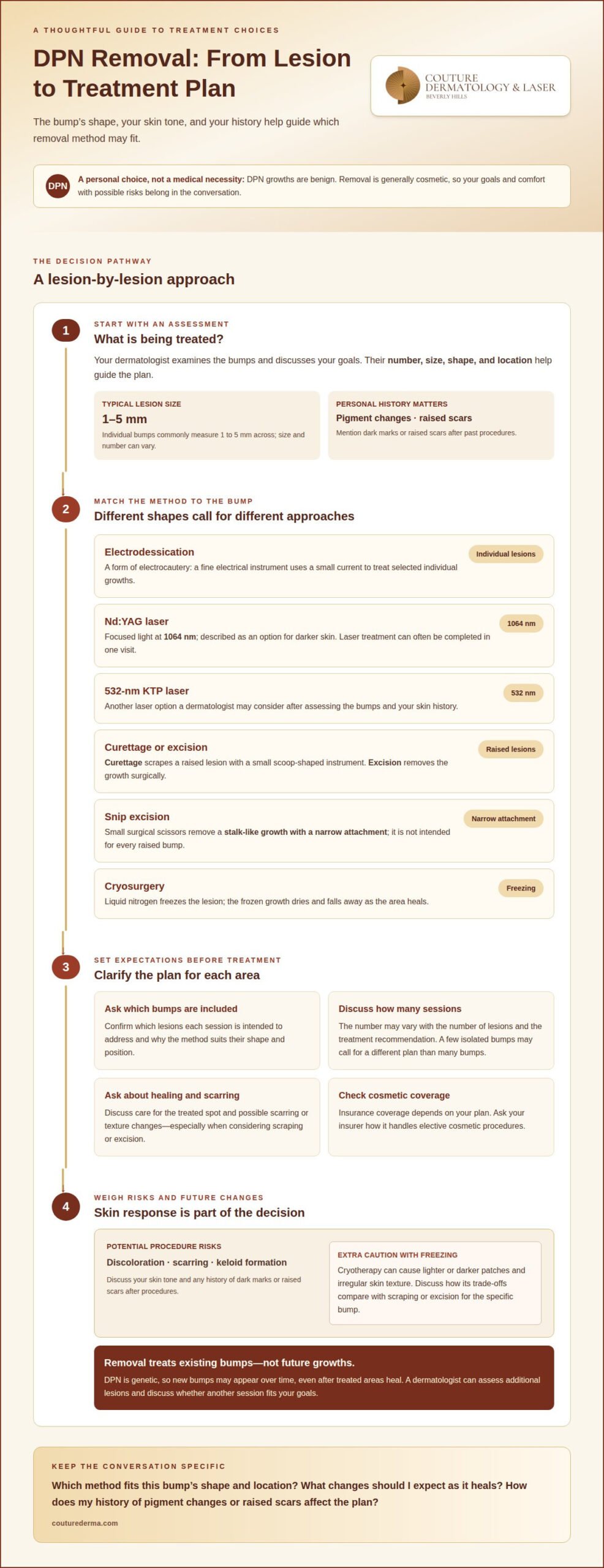
- Electrocautery, certain lasers, freezing, scraping, and snip excision are options; the bump’s shape and your skin’s needs help guide the approach.
- Skin tone matters when planning treatment, since procedures can cause pigment changes, scarring, or keloids.
- Healing commonly takes several days, while small scabs and sensitivity may last longer; careful aftercare supports recovery.
- Choose a dermatologist experienced with Black skin and ask how they tailor treatment to reduce the risk of unwanted pigment changes.
Electrocautery and Nd:YAG laser treatment
Electrocautery and Nd:YAG laser treatment are options for removing benign DPN growths. The bumps’ characteristics, your skin tone, and possible risks help guide the choice.
What are the benefits and possible risks of treatment?
Electrodessication, a form of electrocautery, uses a small electrical current to treat individual lesions. Nd:YAG laser treatment uses a 1064 nm wavelength and is considered an option for darker skin. Both approaches target visible bumps, but removal is cosmetic because DPN growths are benign and don’t need treatment for medical reasons.
Careful treatment matters. Treating lesions precisely may help limit discoloration in the area. Possible complications include skin discoloration, scarring, and keloid formation. Discuss the appearance you hope to achieve alongside these risks, and mention any history of dark marks or raised scars after procedures.
How is treatment tailored to your skin?
A consultation starts with examining the bumps and discussing your goals. Their number, size, and location help shape the plan, along with your skin tone and history of pigment changes or keloids. A dermatologist may consider electrocautery or a laser option, such as Nd:YAG or 532-nm KTP, based on those details.
Describe any past reaction to a skin procedure, such as a lingering dark spot or raised scar. That history can inform a discussion of risks and treatment choices. Ask why the recommended method suits your lesions, which areas it will address, and what changes to expect as your skin heals.
What happens during treatment, and how many sessions may I need?
During electrodessication, a fine electrical instrument treats each selected growth with a small current. Nd:YAG treatment uses focused light at 1064 nm. The precise steps depend on the method and treatment area. Before the procedure, your dermatologist can explain the approach and how each lesion will be addressed.
Laser treatment can often be completed in one visit. The number of sessions may vary depending on the number of lesions and the treatment recommendation. A larger number of bumps may call for a different plan than a few isolated growths. Discuss the proposed sessions before starting, including which lesions each is intended to treat.
Removal doesn’t prevent new DPN lesions from forming over time. Because DPN is genetic, new bumps may appear even after treated areas heal. If you notice additional lesions later, a dermatologist can assess them and discuss whether another session fits your goals. Treatment addresses existing bumps, not future growths.
Cryosurgery, scraping, and excision
These methods remove DPN bumps through freezing, scraping, or careful excision. A lesion’s shape helps determine which technique may suit the treatment area.
How do curettage and excision work?
Curettage removes a raised lesion by scraping it with a small, scoop-shaped instrument. The dermatologist works directly on the growth rather than treating a broader patch of skin. This distinction matters when bumps sit close together or near a visible facial feature. The method is selected according to each lesion’s shape and position.
Some raised DPN growths may need surgical extraction instead of surface scraping. Excision removes the growth, while curettage scrapes it away. These are distinct methods, and the choice affects how the treated spot is managed during healing. Ask which approach is planned for a particular bump and what scarring or texture changes are possible.
What happens during snip excision?
Snip excision uses small surgical scissors to remove a stalk-like DPN lesion. The technique is intended for growths with a narrow attachment, not every bump that appears raised. During evaluation, the dermatologist considers the lesion’s base and location before choosing this method. Matching the technique to the lesion supports a more controlled procedure.
Comfort and the appearance of the healing spot are practical parts of your decision. Discuss how the area will be cared for after snipping, and mention any personal history of raised scars or dark marks. These details help focus the conversation on your skin and the specific lesion, rather than treating all bumps alike.
How does cryosurgery work?
Cryosurgery uses liquid nitrogen to freeze a DPN lesion. The frozen growth dries and falls away as the area heals. Although the method may sound straightforward, the surrounding skin’s response matters, particularly for darker skin tones. Cryotherapy can cause lighter or darker patches, as well as irregular skin texture.
Because pigment changes are a concern, cryotherapy calls for caution on dark skin. Before choosing it, discuss how the lesion’s location, your skin tone, and your history of pigment changes affect the decision. A dermatologist can compare freezing with scraping or excision and explain the trade-offs for the specific bump. If you’d like to discuss a tailored plan, you can book an appointment online.
What occurs during the removal of Dermatosis Papulosa Nigra (DPN)?
DPN removal is generally considered cosmetic because these benign growths don’t need removal for medical reasons. Insurance coverage depends on your plan, so ask your insurer how it handles elective cosmetic procedures. For people considering dermatosis papulosa nigra (DPN) removal in Beverly Hills, an initial visit can clarify which bumps are being assessed and whether removal matches their goals.
DPN bumps are small, raised growths that commonly appear brown or black. Individual lesions typically measure 1 to 5 mm across, though their size and number can vary. Their color and texture may stand out against surrounding skin, especially when several appear together. During an evaluation, point out the bumps that concern you most and describe any changes you’ve noticed.
The face and neck are common locations, including the cheeks, forehead, and under-eye area. DPN can also appear on the chest and upper back. A dermatologist considers the distribution as well as each bump’s appearance. Mention every area where you’ve noticed growths, including spots that may be less visible to you, to help make the examination more complete.
Although DPN can look wart-like, it is a benign, non-contagious growth and a variant of seborrheic keratosis. It is often hereditary, and bumps may first appear during the teenage years, then increase in number or size with age. If relatives have similar growths, share that family history during your visit; it can provide useful context for the evaluation.
A dermatologist examines the bumps’ color, raised shape, size, and location to see whether they fit DPN’s typical pattern. For example, small brown-to-black growths on the cheeks and neck may be consistent with DPN. The assessment focuses on the bumps themselves, rather than relying on skin tone alone, and helps distinguish their recognizable pattern from other skin growths.
A clinical examination is usually enough to identify DPN. In rare cases, a biopsy, meaning a small skin sample examined to confirm a diagnosis, may be used. It isn’t part of every assessment. If a bump looks different from the others or the diagnosis is uncertain, ask what features the dermatologist is evaluating and whether a closer examination is appropriate.
Before a cosmetic procedure, discuss which growths you want treated and the appearance you hope to achieve. The dermatologist considers each bump’s placement, including sensitive areas such as the under-eye region. For dermatosis papulosa nigra (DPN) removal in Beverly Hills, this conversation connects your goals with a plan focused on the specific lesions you want addressed.
Removal treats selected existing growths; it doesn’t prevent new DPN bumps from developing later. Keeping this distinction in mind can help set expectations if more growths appear over time. You can decide whether to address new bumps based on your preferences and a dermatologist’s assessment, rather than assuming every new spot needs removal.
What is involved in the DPN Removal Procedure and what results can I expect?
Electrocautery, also called hyfrecation, may be used to remove DPN growths. The visit includes planning, treatment, and care for the small treated spots.
Electrocautery and Hyfrecation
During electrocautery, a dermatologist uses a fine-tipped electrical device to treat selected lesions. Hyfrecation is another name for this approach. The instrument targets individual growths, aiming to limit effects on surrounding skin. At consultation, discuss which bumps you want addressed and how their location and your skin tone shape the plan.
Pain control is part of the conversation. A topical anesthetic, a numbing medicine applied to the skin, may not fully relieve discomfort from electrocautery when used alone. Tell the dermatologist about previous reactions to numbing products or procedures. This gives you a chance to discuss comfort measures before treatment begins, rather than waiting until the device is being used.
Electrosurgery for DPN Removal
Electrosurgery uses electrical energy to treat a growth. For DPN, electrodessication applies a small electrical current to selected bumps. Your dermatologist can explain how this differs from freezing with liquid nitrogen, which destroys growths through cold. The consultation should clarify the selected method, the areas being treated, and the expected care afterward.
After treatment, small scabs may form as the spots heal. The treated skin typically heals within 5 to 7 days, while small scabs can take up to 2 weeks to heal. Residual sensitivity may last approximately two weeks. These are different stages of recovery, so a spot that remains tender after the surface looks better can still need gentle care.
Follow the aftercare instructions for the treated area. A healing ointment may be applied twice daily for about a week; some guidance recommends Vaseline until the skin is fully healed. Avoid picking at scabs, since disturbing them can affect healing. Keep treated skin protected from sun exposure to help reduce the chance of dark marks.
For the first few days after removal, avoid strenuous activity if your care instructions advise it. Apply moisturizer to treated skin as directed, and avoid rubbing or scrubbing the spots. If you notice new DPN growths later, remember that removal treats existing lesions; it doesn’t stop new benign bumps from developing.
Results vary with the number and location of growths treated, the method used, and how your skin heals. Electrocautery can often be completed in one visit, though multiple sessions may be recommended depending on lesion count and the treatment plan. At consultation, ask which areas are included and what healing changes to expect before deciding on cosmetic removal.
Choosing a dermatologist experienced with Black skin
Yes, dermatologists in Beverly Hills may provide DPN removal. For this procedure, look for a board-certified dermatologist with experience treating Black skin and other darker skin tones, including pigment changes after procedures.
That experience matters because skin can respond differently after treatment, and pigmentation changes may be more noticeable on darker skin tones. A dermatologist should assess your skin, the bumps’ locations, and your history of dark marks or raised scars. These details help guide the choice between options such as electrocautery, laser treatment, and cryotherapy.
In consultation, ask how the dermatologist evaluates pigmentation risk and chooses a method for your skin. For example, cryotherapy freezes a lesion with liquid nitrogen, but it can cause lighter or darker patches and uneven texture. A thoughtful discussion should cover those possible effects, how healing will be managed, and why the proposed approach suits your skin.
Look for a provider who treats DPN in people with a range of skin tones, rather than relying only on experience with lighter skin. Ask what they consider when treating a small bump near the cheek or under-eye area. The answer should address the lesion’s location, surrounding skin, and the possibility of pigment changes, not just the removal technique.
During evaluation, the dermatologist should examine the growths and confirm they look consistent with DPN. A clinical examination is usually enough; a biopsy may be used in rare cases to confirm the diagnosis. Mention a family history of keloids, previous dark marks after a procedure, or past healing concerns. These details can inform treatment planning before a method is selected.
Representation in dermatology is also relevant context: African Americans make up about 3% of the U.S. dermatology workforce. That figure doesn’t tell you an individual clinician’s skill, so focus on direct experience with pigmented skin and clear explanations of risks. You deserve to understand why a method is being considered and what changes to watch for during healing.
Before moving forward, use the consultation to discuss your aesthetic goals, the areas you want treated, and your concerns about pigmentation or scarring. A good plan should make those factors part of the decision, especially if several methods are being considered. If you’re ready to discuss your skin and treatment goals, schedule a consultation.
Couture Dermatology & Laser Beverly Hills: Laser Hair Removal
Couture Dermatology & Laser Beverly Hills can help you discuss DPN treatment options and whether laser treatment suits your skin. Laser hair removal is a separate service, not a method for removing DPN growths; for those bumps, the conversation should focus on their appearance, your skin tone, and the risks of pigment changes.
At Couture Dermatology & Laser, your dermatologist can assess your concerns and discuss a treatment plan tailored to your skin and goals. You can also discuss Laser Resurfacing if you have separate concerns about skin texture. The next step is a clear conversation about your priorities, the options, and what healing may involve.
Contact Couture Dermatology & Laser in Beverly Hills to discuss your DPN concerns and treatment goals.
Take the Next Step at Your Pace
Deciding whether to treat DPN is personal. You don’t need to rush toward a procedure just because the bumps are visible, and exploring options doesn’t mean you’ve committed to treatment. A useful next step is to identify what you’d like to change, what concerns you most about healing, and which questions would help you feel informed.
For dermatosis papulosa nigra (DPN) removal in Beverly Hills, a consultation can connect your priorities with an approach suited to your skin. The best plan depends on the growths, your treatment goals, and how your skin responds to procedures. Bring up concerns about pigment changes or scarring, and make space to discuss the alternatives.
You can take that first step simply by arranging a conversation. Book an appointment to discuss your skin goals with Couture Dermatology & Laser Beverly Hills. You deserve a thoughtful plan and the confidence to decide what feels right for you.
Frequently Asked Questions
What is DPN removal?
DPN removal is a clinician-performed procedure that removes selected benign bumps for cosmetic reasons. In a Beverly Hills consultation, your dermatologist reviews the bumps and your skin history, then discusses a suitable method, such as electrocautery, laser treatment, freezing, scraping, or snip excision. The plan should identify which growths are targeted and how you’ll care for treated skin afterward.
Are there any side effects or risks?
Yes. Possible risks include temporary or lasting changes in skin color, scarring, and raised scars called keloids. Cryotherapy can also affect skin texture or leave lighter or darker areas. Before choosing a method, tell your dermatologist about previous dark marks or raised scars after skin procedures. Ask how the specific technique may affect the treated area and what changes should prompt follow-up.
Can I go back to my regular routine after the procedure?
You can usually return to lighter daily activities while treated spots heal, but strenuous exercise may need to wait for a few days. Keep the area clean and follow your clinician’s aftercare instructions, including ointment use. Don’t pick at scabs, and protect healing skin from sun exposure. Ask specifically about makeup, shaving, or products used near the treated area, since instructions can depend on its location.
How long does it take to see results?
You may notice treated bumps changing as the skin heals, rather than seeing the final appearance immediately after the procedure. The method used, the number of growths treated, and your skin’s healing response all affect what you see and when. Some laser treatments may be completed in one visit, while other plans involve additional sessions. New DPN growths can also appear later.
Is the procedure painful?
The sensation depends on the removal method and the area being treated. Electrocautery can cause discomfort, and numbing medicine applied to the skin may not fully relieve it on its own. Tell your dermatologist if you’re worried about pain or have had a difficult experience with a prior procedure. Before treatment, discuss the planned comfort measures and sensations you might notice.
What are DPNs?
DPNs are small, raised, brown or black benign growths that commonly appear on the face and neck. They’re a non-contagious form of seborrheic keratosis and often run in families. Their visible texture can make them an aesthetic concern, but they don’t need removal for medical reasons. A dermatologist can assess bumps you’re unsure how to identify.
Who Is Affected By DPN?
DPN is most often seen in people with darker skin tones and may run in families. The bumps can start appearing during the teenage years and become more noticeable with age. Women may be affected more often than men. If relatives have similar growths, mention that history during an evaluation; it can help your dermatologist understand the pattern alongside the bumps’ appearance and location.
What is dermatosis papulosa nigra (DPN), and how is it diagnosed?
Dermatosis papulosa nigra is a benign, non-contagious skin condition that causes small, raised brown or black growths. A dermatologist can usually diagnose it by examining the bumps and considering their appearance and distribution. A biopsy, in which a small skin sample is examined, may be used in rare cases when the diagnosis needs confirmation. Share any concerns about a bump’s appearance during your visit.