If you’re weighing treatment for a stubborn wart, cryotherapy for warts cost in Los Angeles is only part of the decision. You may also want to know whether insurance could help with the bill and what to expect as your skin heals.
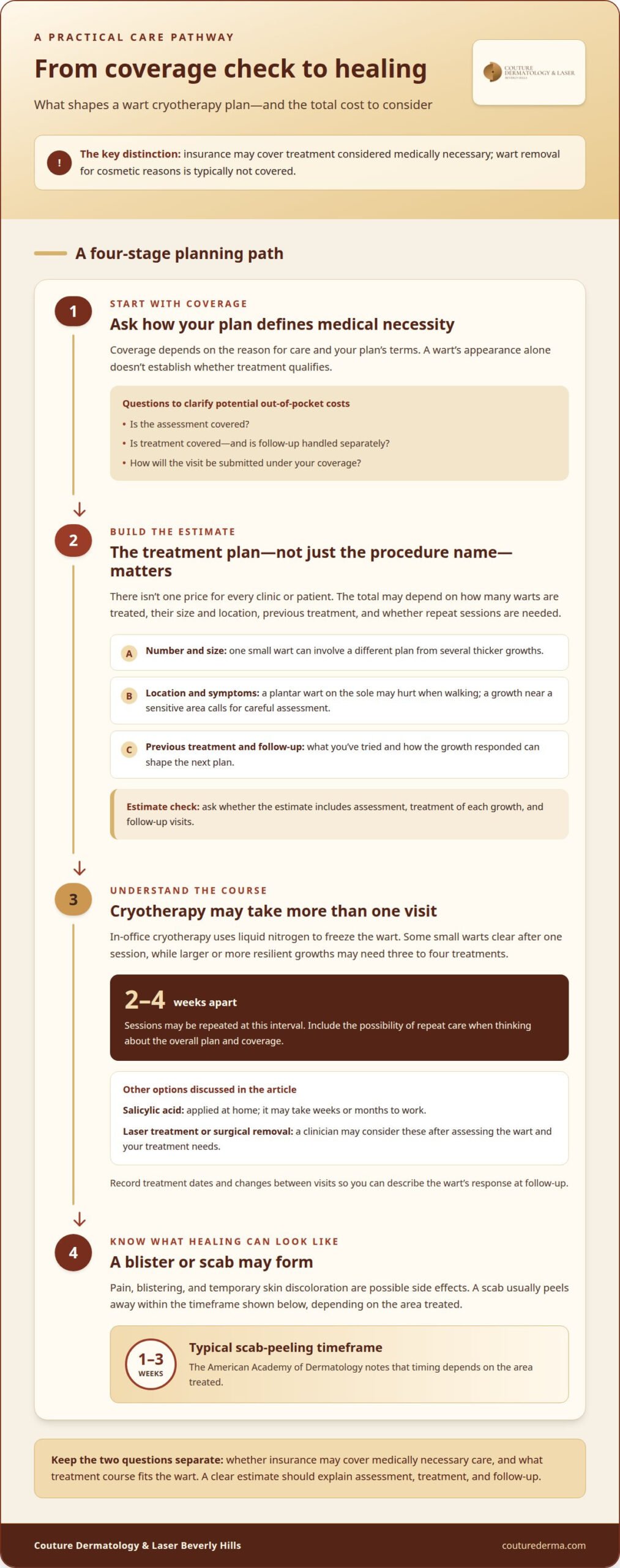
That’s understandable. Coverage often depends on whether treatment is considered medically necessary; cryotherapy for cosmetic reasons is typically not covered. The total expense may also depend on how many warts are treated and whether repeat sessions are needed.
In my practice, I help patients understand what to expect as their skin heals. According to the American Academy of Dermatology, a scab usually peels away within 1 to 3 weeks, depending on the area treated. Knowing what’s typical can help you plan with greater confidence.
Key Takeaways
- Insurance may cover wart cryotherapy when it’s considered medically necessary; treatment done for cosmetic reasons is typically not covered.
- The total cost can depend on how many warts are treated and whether you need repeat sessions, so consider the full course of care when planning.
- In-office cryotherapy uses liquid nitrogen to freeze the wart, and some warts need more than one treatment.
- A blister or scab can form as the treated skin heals. According to the American Academy of Dermatology, a scab usually peels away within 1 to 3 weeks, depending on the area treated.
- Knowing what side effects can occur, including pain, blistering, and temporary skin discoloration, can help you understand what to expect after treatment.
Does Insurance Cover Cryotherapy for Wart Removal?
Insurance may cover wart cryotherapy when it’s considered medically necessary; cosmetic removal is typically not covered. I see patients who want to understand that distinction before deciding whether to pursue treatment. Coverage depends on the reason for care and the terms of your plan, so a wart’s appearance alone doesn’t establish whether treatment qualifies.
Before your visit, ask your insurer how it defines medical necessity for wart removal. Ask whether the assessment and treatment are covered, and whether follow-up care is handled separately. These questions can help you understand your potential out-of-pocket responsibility without assuming every plan treats wart care the same way.
How does cryotherapy compare with other wart treatments?
For Los Angeles patients, treatment options can include cryotherapy, salicylic acid, laser treatment, or surgical removal. Salicylic acid is applied at home, while cryotherapy freezes the growth in a medical office. A clinician may consider laser treatment or surgery after assessing the wart and your treatment needs.
Compare the full treatment plan, not just the procedure name. At-home salicylic acid may take weeks or months to work, while office-based care involves an assessment and may include follow-up. The appropriate approach depends on the wart’s location, thickness, and response to previous treatment.
Where can you receive wart cryotherapy, and what affects the price?
Clinician-administered wart cryotherapy is performed in a medical office. The visit can include an assessment of the growth and treatment planning. There isn’t one price that applies to every Los Angeles clinic or patient. The total may depend on how many warts are treated, their location, and whether the plan includes repeat sessions.
Ask for an estimate that explains what the visit includes and how follow-up care is handled. A single small wart and several growths requiring further treatment involve different plans. If you’re using insurance, ask how the assessment, procedure, and later visits may be processed under your coverage.
Warts can appear on different parts of the body, and location can shape the discussion. A plantar wart on the sole, for example, may cause discomfort when walking. A growth near the genitals needs careful assessment rather than assumptions based on appearance. Tell the clinician where it is and whether it affects daily activities.
Sessions may be repeated two to four weeks apart, and larger or more resilient warts may need three to four treatments. Keep that possibility in mind when considering the overall plan and coverage. Record treatment dates and changes so you can describe the wart’s response at follow-up.
In my conversations with patients, clarity comes from separating two questions: whether insurance may cover medically necessary care, and what treatment course fits the wart. Ask your insurer about coverage, then make sure the proposed plan explains assessment, treatment, and follow-up. That gives you a more useful basis for deciding how to proceed.
Factors that affect wart removal prices
When considering what shapes a wart-removal estimate, start with the treatment plan, not just the procedure name. The number of growths, their size, and their locations all matter. Treating one small hand wart differs from assessing several thick plantar warts that cause discomfort when walking.
What details can change your estimate?
Location helps determine what the visit involves. A wart on the sole may be thicker from pressure, while a growth near a sensitive area calls for careful assessment. Tell the clinician where each spot is and whether it hurts, catches on clothing, or interferes with an activity. Those details help clarify what the visit needs to address.
Previous treatment matters, too. If you’ve tried salicylic acid or had a wart frozen, describe what happened and whether the growth changed. A clinician can use that history to assess whether the same approach remains suitable or another plan deserves discussion. That assessment may affect the recommended care and follow-up.
Ask what the estimate includes. Does it cover an assessment, treatment of each growth, and follow-up visits? A clear breakdown can help you compare the same parts of care. If you’re using insurance, ask how the visit will be submitted and whether the plan considers the treatment medically necessary.
Does wart type or treatment response affect the plan?
Yes. Common warts and plantar warts can differ in thickness and location, and those features can influence how a clinician approaches removal. A growth that remains after treatment may need reassessment rather than an automatic repeat. Share whether it has changed in size, shape, or tenderness since the previous visit.
Some small warts clear after one cryotherapy session, while more resilient growths may need repeated care. The number of visits can affect the overall expense, so ask how the clinician will evaluate progress and decide whether another session is appropriate. Track treatment dates and changes between appointments to give the next assessment useful context.
Insurance is another factor, but coverage and the clinical plan are separate questions. A plan may cover treatment considered medically necessary, while cosmetic removal is typically excluded. Ask your insurer how it evaluates wart care, then request an estimate that distinguishes the recommended treatment from any separate assessment or follow-up components.
The most useful estimate is tied to your specific growths and care plan. Before deciding, note each wart’s location, any previous treatment, and the symptoms it causes. Then ask how those details shape the recommended approach and what services the estimate includes. This gives you a practical basis for understanding the proposed care.
What Is Cryotherapy for Warts?
Cryotherapy freezes a wart with liquid nitrogen, damaging the affected tissue. A doctor can apply it in an office and tailor the freezing step to the wart’s location and size.
Liquid Nitrogen Treatment
Warts are benign (noncancerous) skin growths caused by a virus infecting the outer layer of skin. In-office cryotherapy generally uses liquid nitrogen, not dry ice, to freeze the targeted tissue. Liquid nitrogen can reach -321 degrees Fahrenheit. The doctor’s focus is the wart itself, since the treatment area and freezing time influence how much surrounding skin is exposed.
How the Procedure Is Performed
A doctor applies liquid nitrogen directly to the wart, using a spray or cotton swab. The application may last a few seconds; treatment descriptions include exposures of 10 and 30 seconds. The doctor selects the approach based on the wart being treated. Anesthetic (medicine that numbs an area) is typically unnecessary, though it may be used in some cases.
The freezing step itself is brief, but the full office visit can include assessing the growth and identifying its location. Cryotherapy may take a few minutes in a doctor’s office. During the assessment, mention whether the wart is on your hand, face, or foot, since location helps shape the treatment plan.
A doctor’s liquid-nitrogen treatment for a wart usually takes less than a minute. The clinician applies the cold substance to the growth rather than treating a broad patch of skin. Ask which area will be frozen and what aftercare applies to that specific site.
One treatment may not remove every wart. Liquid-nitrogen cryotherapy is often repeated every two to three weeks until the wart is gone. Keep track of treatment dates and changes in the growth, so the doctor can assess progress at each visit.
Freezing can injure tissue around the wart if exposure is prolonged. Side effects such as sores (open breaks in the skin) and infection are more likely when freezing lasts 30 seconds or longer. The doctor balances the treatment time with the wart’s size and position. Tell the clinician if the area is especially sensitive before treatment begins.
Scarring is a possible concern, especially when the treated area is visible or exposed to friction. Cryotherapy can also cause pain, blistering, or skin discoloration. Ask the doctor what changes to expect at the treatment site and how to care for the area if a blister forms.
At-home freezing products aren’t the same as medical cryotherapy. Over-the-counter freezing products are less powerful than liquid nitrogen. A doctor’s procedure uses liquid nitrogen and a targeted application. Don’t assume a home kit provides the same treatment simply because both approaches freeze a wart.
Healing and aftercare
Before cryotherapy, tell your clinician about prior wart treatments and the area being treated. Afterward, expect a short healing process rather than an immediate change. A blister may form within 24-48 hours, and the treated tissue can look different before it settles.
According to the American Academy of Dermatology, a scab forms and will usually peel away within 1 to 3 weeks, depending on the area treated. A blister may dry over the next few days, while dead tissue can come away as healing progresses. Let the area heal naturally instead of picking at the scab.
For daily care, gently wash the treated spot with mild soap and water once a day. If a blister breaks, clean the area to help limit the spread of the wart virus. Avoid rubbing or picking at the site, especially on a hand or foot exposed to frequent friction.
What should you expect as the treated area heals?
Pain can last for a few days after freezing. Blisters may take 1-2 weeks to resolve, and temporary skin discoloration can remain as the area heals. The timing varies by location; a spot on the sole may be irritated by walking, while a hand wart may catch during everyday tasks.
Aftercare can also depend on the wart’s location. Skin after treatment for genital warts may take one to three weeks to heal. Keep the treated area clean and follow the care instructions for that site. If the blister breaks, avoid sharing items that touch the area while it heals.
Salicylic acid may be applied at home between doctor’s-office treatments. Use it only as directed for the specific wart and treatment plan. Don’t apply it to skin that is open or blistered unless your clinician has advised you to do so. This helps avoid irritating healing tissue.
Healing doesn’t necessarily mean the wart is gone after one visit. Cryotherapy is commonly repeated, and the treated growth may need time to separate from surrounding skin. Keep your follow-up appointment if another session was planned, and note whether the wart changes or remains visible.
For a practical recovery check, look at the area during your once-daily wash. Notice whether the blister has broken, the scab is loosening, or the wart remains. Contact your clinician if you’re concerned about how the site is healing, rather than pulling tissue away yourself.
Aftercare is part of treatment, not an extra step. Gentle washing, avoiding picking, and using salicylic acid only as directed can support careful recovery. A healing blister or scab is a temporary stage; give the skin time to recover between sessions.
Possible side effects and risks
Cryotherapy can cause temporary skin changes as the treated area responds to freezing. Knowing which effects may appear, and when to seek a dermatologist’s assessment, helps you monitor recovery carefully.
Side Effects and Discomfort
Redness, swelling, blistering, and temporary skin discoloration are common possible effects. A blister may appear within hours, and soreness can continue for a few days. The treated spot may also look darker or lighter while it heals. Don’t pick at the blister or scab; follow the aftercare instructions for that area.
More intense freezing has added risks. Ulcers and infection are more likely when wart freezing lasts 30 seconds or longer. This doesn’t mean those effects will occur, but it makes the treatment duration and location important details to discuss. Tell the dermatologist if the skin becomes increasingly painful or appears infected.
Pain During Treatment
You may feel a brief stinging or burning sensation as liquid nitrogen is applied. An anesthetic, medicine that numbs an area, is generally not needed for wart cryotherapy, though it may be used in some cases. If you’re concerned about discomfort, tell the clinician before treatment so you can discuss the approach.
Pain can last for a few days afterward, particularly if the treated spot is exposed to pressure or friction. For example, a frozen wart on the sole may feel tender when you walk, while a finger wart may be sensitive during everyday tasks. Avoid rubbing the area, and follow the care instructions for its location.
Blistering is a possible response to freezing, but a broken blister needs gentle care. Clean the area if it opens, and avoid picking at loose tissue. If pain worsens or you’re concerned about infection, contact a dermatologist for an assessment instead of treating the area with additional products.
A growth that changes, bleeds, or doesn’t look like a typical wart deserves examination before freezing. Warts are caused by human papillomavirus (HPV), but not every skin growth is a wart. High-risk HPV infections that persist for many years increase cancer risk; that concern is distinct from assuming an ordinary skin wart is cancer.
Genital growths also need a careful diagnosis, since treatment depends on identifying what’s present. If a spot is new, changing, or uncertain, a medical evaluation can help distinguish a wart from another skin concern. You can book a dermatology appointment to discuss an examination and appropriate care.
Couture Dermatology & Laser Beverly Hills
Couture Dermatology & Laser in Beverly Hills provides medical dermatology care to help assess skin concerns and determine an appropriate treatment. If you’re unsure whether a growth is a wart or want to discuss treatment considerations, an evaluation can clarify the next step. Cryotherapy, insurance coverage, and follow-up needs depend on the diagnosis and care plan.
Bring questions about the growth’s location, previous treatments, and insurance coverage. That gives us useful context for discussing your options and what to expect. If cryotherapy isn’t appropriate, we can discuss other relevant care options rather than assuming one treatment fits every concern.
Contact Couture Dermatology & Laser Beverly Hills to discuss your skin concern.
Take the Next Step With a Clear Plan
Deciding whether to treat a wart is also an opportunity to get clarity about the spot itself. If you’re uncertain about its appearance, location, or whether it has changed, raise that concern in a medical discussion before choosing an approach. The next step should account for your skin, comfort, and what you hope to resolve.
The cost of cryotherapy for warts in Los Angeles is only one part of the decision. Your priorities matter, too: you may want to address discomfort, reduce irritation during daily activities, or understand the treatment before proceeding. A clinician can help you discuss these considerations and the options that fit your needs.
If you’d like to discuss your concern and plan a next step, contact Couture Dermatology & Laser Beverly Hills. A thoughtful conversation can help you move forward with greater confidence and a plan that feels right for you.
Frequently Asked Questions
How many cryotherapy sessions will I need?
Many warts need two to four cryotherapy sessions, though a small wart may clear after one. The number depends on the wart’s size, depth, location, and response after freezing. A plantar wart that remains tender or visible may need a different course than a small hand wart. At follow-up, note whether the surface has changed and whether the original growth is still present.
Are there any hidden costs I should know about?
Potential charges may relate to the initial assessment, the freezing procedure, or follow-up care. Ask for an estimate that separates these items and explains which services are included. If you plan to use insurance, ask how the visit and treatment will be processed under your plan. This gives you a clearer picture of the full care plan than considering the procedure alone.
How Well Does Cryotherapy Work?
Cryotherapy can remove warts by freezing the affected tissue, but response varies by wart type and treatment course. A common wart on a hand may respond differently from a thicker plantar wart on the sole. At follow-up, the clinician can assess whether the growth is shrinking or remains active. If it persists, discuss whether another session or a different treatment approach makes sense.
How long does a typical wart removal session last?
The freezing procedure itself usually takes less than a minute for one wart. The appointment can take longer because the clinician needs to examine the growth, confirm its location, and discuss aftercare. Multiple growths or a more involved treatment plan may extend the visit. If you have several spots, mention them when arranging care so the appointment can account for the full assessment.
How much does cryotherapy for warts cost in Los Angeles?
The cost of cryotherapy for warts in Los Angeles depends on what the visit includes and the treatment plan. Factors may include the number and location of warts, the clinician’s assessment, and whether follow-up sessions are recommended. Rather than relying on a single session figure, ask for an estimate that describes the expected course and any separate visit components.
What is the average price per cryotherapy session for wart removal in Los Angeles?
There isn’t one useful session price for every Los Angeles patient because treatment plans and billing structures differ. A single small wart and several growths requiring repeat care involve different needs. For a meaningful estimate, clarify whether the figure covers examination as well as freezing, and whether later visits are billed separately. Insurance coverage can also affect your out-of-pocket responsibility.
Do Los Angeles dermatologists charge separately for consultation and cryotherapy?
Consultation and cryotherapy may appear as separate items, depending on how a clinic bills for assessment and treatment. The estimate or bill should make clear which services are included, such as evaluating the growth or freezing it. If insurance is involved, ask how each item is handled under your plan. This helps you understand the charges without assuming every clinic uses the same structure.
How many cryotherapy sessions are usually needed to remove a wart?
Two to four sessions are commonly needed, with the plan adjusted according to the wart’s response. A wart that becomes smaller after freezing may still need another assessment before treatment ends. Track changes between visits, including whether the spot remains raised or causes discomfort. That information helps the clinician decide whether the planned course is working or needs to be reconsidered.