
Contact dermatitis treatment in Beverly Hills starts with identifying and avoiding the substance irritating your skin. Allergic and irritant reactions can look alike, so care depends on your symptoms, when they began, and what your skin was exposed to. Prescription creams, including topical steroids, may help relieve inflammation and itching when appropriate.
A rash that returns after using a new product, encountering something at work, or doing everyday cleaning can be frustrating, especially when the cause is unclear. Scratching or trying several remedies at once can also make irritated skin harder to assess.
This article explains how contact dermatitis is evaluated, how allergic and irritant forms differ, and when patch testing may help identify a trigger. It also covers topical steroid use and possible signs of a secondary infection, such as increasing pain, weeping, or yellow crusting.
Key Takeaways
- Contact dermatitis can stem from an allergy or direct irritation, and the difference helps shape the treatment approach.
- Recognizing likely triggers, from personal-care products to workplace exposures, can help reduce repeat flare-ups.
- Topical steroids may ease inflammation and itching when used appropriately; the medication and application plan depend on the affected area and rash.
- Increasing pain, weeping, or yellow crusting can signal a secondary infection that needs prompt medical attention.
- A careful history and skin examination help distinguish contact dermatitis from other rashes and guide whether further testing may help.
What is contact dermatitis?
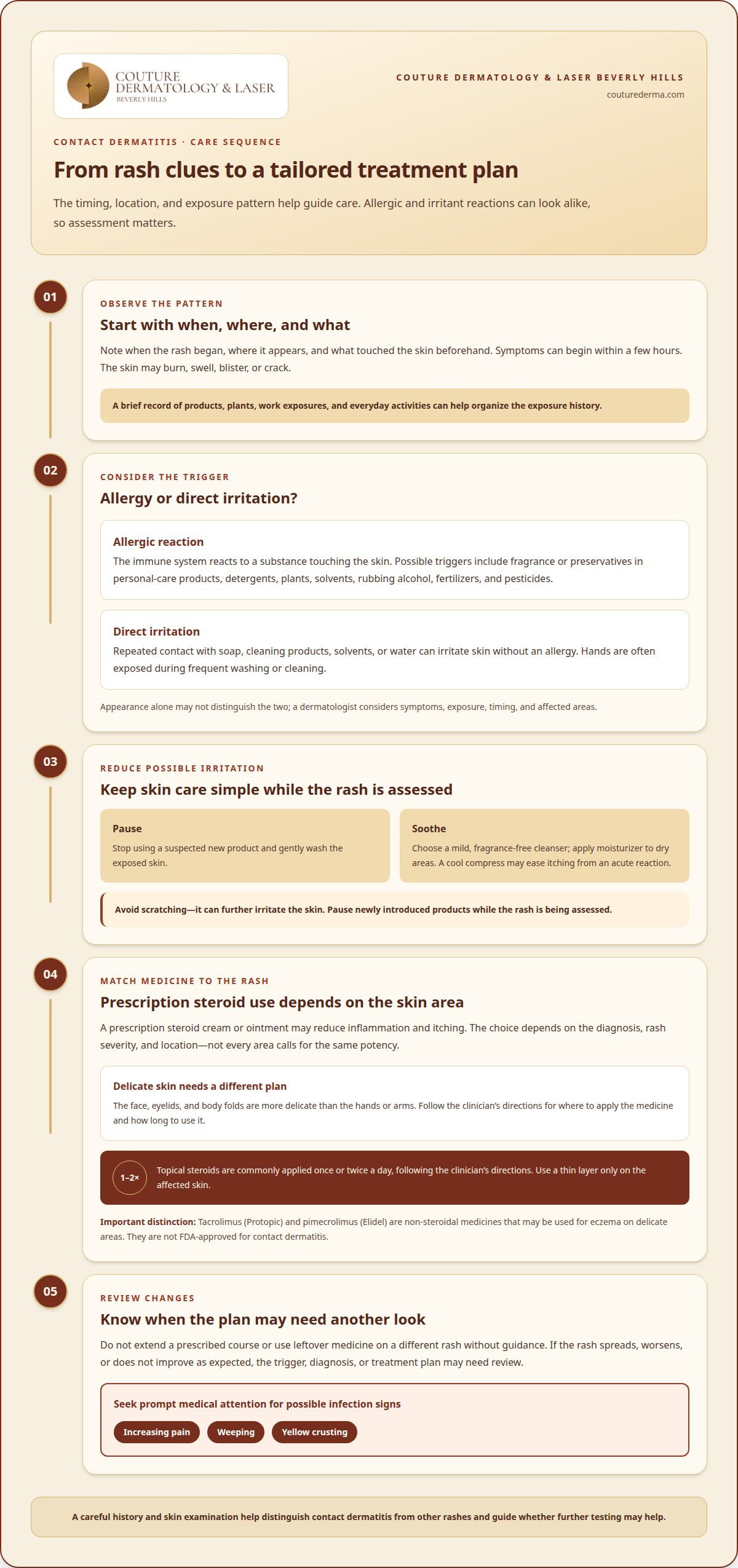
You may notice a red, itchy patch after trying a new lotion or handling a cleaning product. Contact dermatitis is skin inflammation caused by direct contact with a substance. Symptoms can begin within a few hours, and the rash may burn, swell, blister, or crack. A careful assessment considers both the skin’s appearance and the timing and location of exposure.
Allergic contact dermatitis occurs when the immune system reacts to a substance that touches the skin. Possible triggers include fragrances or preservatives in personal-care products, detergents, plants, solvents, rubbing alcohol, fertilizers, and pesticides. A reaction may appear where contact occurred, though its pattern can vary. Repeated exposure to an allergen may worsen symptoms, so your product history is useful during an evaluation.
Irritant contact dermatitis does not require an allergy. Repeated contact with soap, cleaning products, solvents, or water can irritate skin directly. Hands are often exposed during frequent washing or cleaning. A dermatologist considers the affected areas, your routine, and the timing of symptoms rather than relying on appearance alone.
Eczema can also cause dry, itchy, red skin, so its symptoms may resemble contact dermatitis. Atopic eczema is a chronic condition that can flare over time; potential environmental triggers include harsh soaps, allergens, and weather changes. During an assessment, a dermatologist asks when the rash began, where it appears, and which products or activities came before it. This history helps distinguish possible causes.
For home care, stop using a suspected new product and gently wash the exposed skin. Choose a mild, fragrance-free cleanser, then apply moisturizer to dry areas. A cool compress may ease itching from an acute reaction. Avoid scratching, which can further irritate the skin. Keep a brief record of products, plants, and work exposures that precede symptoms. This timeline can help organize your discussion with a specialist.
How much does a dermatologist visit for contact dermatitis cost in Beverly Hills? The cost depends on the visit and evaluation, including whether further assessment is needed. The clinician’s practice and your insurance benefits also affect the final amount.
Which Beverly Hills dermatologists treat contact dermatitis and accept insurance? A dermatologist who evaluates inflammatory rashes can assess contact dermatitis. Coverage for a particular visit depends on the dermatologist and the details of your insurance plan, not simply the clinic’s location.
Are telehealth dermatology appointments available for contact dermatitis in Beverly Hills? Whether a remote assessment is suitable depends on how clearly the rash can be viewed and whether an examination or testing is needed. A clinician considers the visible pattern, affected areas, and exposure history to determine what evaluation fits the concern.
Are topical steroids safe to use?
A prescription steroid cream or ointment can reduce inflammation and itching during a contact dermatitis flare. Its suitability depends on the rash’s severity, location, and diagnosis. The goal is to calm the reaction with medication suited to your skin, not to use the strongest option everywhere. At Couture Dermatology & Laser, the dermatologist explains where to apply it and how long to follow the prescribed course.
For contact dermatitis, topical steroids are commonly applied once or twice a day, following the clinician’s directions. Potency matters: skin on the face, eyelids, and body folds is more delicate than skin on the hands or arms. The affected area and severity also guide the choice. Do not extend a course or use leftover medicine on a different rash without guidance.
Using more cream does not necessarily settle symptoms faster. Apply a thin layer only to the affected skin, and keep it away from areas not included in your prescription. Tell your dermatologist if the rash spreads, worsens, or does not improve as expected. These changes may mean the trigger is still present, the diagnosis needs review, or the treatment plan should change.
Can non-steroidal creams help?
Non-steroidal options work differently from corticosteroids. Tacrolimus, sold as Protopic, and pimecrolimus, sold as Elidel, are topical calcineurin inhibitors. They affect immune activity in the skin and may be used for eczema on delicate areas such as the face, eyelids, and folds. They are not FDA-approved for contact dermatitis, so their use for eczema should not be assumed to apply to contact dermatitis.
That distinction matters if an itchy patch appears after product use or workplace exposure. A cream used for atopic eczema may not address an ongoing contact reaction. During a consultation, the dermatologist considers the rash pattern, likely exposure, and skin site before discussing treatment. Avoiding the trigger remains an important part of managing contact dermatitis, even when medicine eases the inflammation.
Non-steroidal care can also include gentle cleansing and regular moisturizer use to support dry, irritated skin. Choose a mild, fragrance-free cleanser, and pause newly introduced products while the rash is assessed. If a prescribed cream causes worsening irritation, stop and seek medical advice rather than adding another active product. A clear record of what you applied can help guide that conversation.
If symptoms keep returning or you’re unsure which cream fits the affected area, a medical evaluation can help clarify the diagnosis and treatment choices. You can schedule a dermatology appointment to discuss a persistent or recurring rash.
Allergic and irritant contact dermatitis
The timing, location, and exposure pattern help distinguish an allergic response from direct irritation. That distinction matters because the next step may involve patch testing, reducing contact, or reviewing another skin condition, such as atopic dermatitis.
Allergic and Irritant Responses
Allergic contact dermatitis is an immune reaction to a substance your skin has become sensitive to. A rash may follow contact with fragrance, preservatives, plants, or workplace materials, and repeated exposure can worsen symptoms. Irritant contact dermatitis does not require an allergy; soaps, detergents, solvents, and frequent wet work can affect the skin through direct contact.
The two reactions can look alike, so appearance alone may not reveal the cause. Note where the rash appears, when it begins after exposure, and whether it returns after using a particular product or doing a task. For example, hand irritation after repeated cleaning may suggest an irritant pattern, while a recurring rash after wearing a particular accessory may prompt an allergy evaluation.
Patch Testing for Allergens
Patch testing can help identify substances that trigger allergic contact dermatitis, including reactions that are difficult to connect with daily products. A specialist places small patches containing selected allergens on the skin. The patches are removed after 48 hours, and the test area is examined at that visit and again between 72 and 96 hours.
Those results help distinguish a delayed allergic response from skin irritation beneath a patch. Patch testing targets contact allergens; it does not identify every cause of eczema or prove that a substance is irritating rather than allergenic. Bring your doctor a list of skin-care products, medicines, and relevant work exposures. Product names and ingredient lists can help guide which allergens to evaluate.
Avoiding Identified Allergens
Once testing identifies an allergen, avoidance means looking for it in the products and materials that touch your skin. A fragrance allergy, for example, may require reviewing lotions, cleansers, and laundry products, not just the item used when the rash first appeared. Read ingredient labels carefully, since similar products can contain the same trigger.
If a workplace material may be involved, consider how contact happens during a task and which surfaces touch the affected area. Wash skin after accidental exposure, then use a mild cleanser and moisturizer rather than adding several over-the-counter products. Keep a brief exposure log if symptoms recur; dates, product names, and activities can help your doctor refine the plan.
Recognizing secondary infection
Contact dermatitis can leave skin itchy, cracked, or blistered, and scratching may break its surface. Watch for increasing pain, new weeping, yellow crusting, or sudden worsening despite treatment. These changes can suggest a secondary bacterial infection rather than irritation alone. A rash that shifts from itchy and dry to tender and oozing deserves prompt medical attention.
When is contact dermatitis severe enough to require urgent medical care? Seek immediate care for severe pain or swelling, signs of infection, or fever or chills alongside a rash. Rapid worsening or a large affected area also warrants prompt medical assessment.
Look at changes over time, not just one symptom. A small amount of clear fluid from a fresh blister can differ from increasing drainage with yellow crusts and tenderness. During a consultation, describe when the rash changed, where it spread, and whether pain or warmth increased. These details help a clinician assess infection and distinguish it from an ongoing contact reaction.
Antibiotics do not treat contact dermatitis itself. A clinician may prescribe topical or oral antibiotics when an infection is present, depending on its appearance and extent. Do not use leftover antibiotic creams on a new rash; the wrong product can irritate skin or delay appropriate care. Keep the area gently clean while arranging an evaluation for worsening symptoms.
With a chronic skin condition such as eczema, repeated scratching can leave openings that are easier to irritate. Keep nails short and use a cool, clean compress to soothe itching while avoiding rubbing. If you already use eczema creams, tell the clinician their names and where you apply them. This information can help separate treatment effects from new signs of infection.
Asthma is useful medical-history information during a skin consultation, particularly if you also have recurring eczema. It does not determine whether a rash is infected, so focus on observable changes such as pain, drainage, and crusting. Note any new cleanser, bandage, or cream applied before symptoms changed, and bring that timeline to your appointment.
Trying several new products at once can make an inflamed area harder to assess. Until a clinician evaluates a worsening rash, pause recently added, nonessential products and avoid scratching or picking crusts. Do not cover oozing skin with an unprescribed cream. If fever, chills, severe pain, or swelling develops, seek urgent medical attention rather than waiting for home care to help.
Medical history and physical examination
At an appointment, the dermatologist starts with the story behind the rash: when it appeared, where it began, and what touched that area beforehand. A new cleanser, work glove, adhesive bandage, or hair product can be a useful clue. The dermatologist may also ask whether symptoms ease when you stop using a product, then return after using it again.
Bring the names or ingredient lists of products you use on the affected skin. Include cleansers, moisturizers, cosmetics, laundry products, and prescribed creams such as corticosteroids. Tell the dermatologist when you started each item and where you apply it. A concise timeline can help distinguish a reaction linked to one exposure from an inflammatory condition that flares without a clear product connection.
During the physical examination, the dermatologist assesses the rash’s location, appearance, and extent, along with any cracking, blisters, or swelling. Those findings are compared with your exposure history and symptoms. A rash limited to skin that contacts a product may raise different questions from a recurring pattern affecting several areas. The exam also helps identify signs that need prompt evaluation, such as yellow crusting or increasing pain.
Eczema can resemble contact dermatitis, and atopic dermatitis can flare over time. A dermatologist considers your history and examines the skin while assessing other possible conditions, including psoriasis or an allergic reaction. Appearance alone may not settle the diagnosis. For example, a rash that persists after stopping one suspected product may prompt a closer review of other exposures and possible causes.
When eczema is being evaluated, blood tests may measure IgE, a type of antibody, to assess allergic sensitization. That result is one part of the assessment, not a stand-alone explanation for every rash. A skin biopsy, which involves examining a small skin sample, is used only in rare cases to help rule out other conditions. Further testing depends on the questions raised by your history and examination.
Before your visit, take clear photos as the rash changes and write down any new products or tasks that preceded it. Include whether itching, burning, or tenderness came first, and whether symptoms spread after exposure. These details help connect the skin findings with your daily routine. They also help guide whether avoiding a suspected trigger, patch testing, or another evaluation makes sense.
If a persistent or changing rash is affecting your routine, book an appointment for a dermatology evaluation. A focused history and examination can shape the next steps around your symptoms, exposures, and skin findings.
Couture Dermatology & Laser Beverly Hills: Laser Treatment
Couture Dermatology & Laser in Beverly Hills provides Medical Dermatology Treatments for skin concerns such as contact dermatitis. If a rash keeps returning, worsens, or remains difficult to distinguish from eczema, the dermatologist can assess its appearance, history, and possible triggers, then discuss an appropriate care plan.
Laser Treatment is a separate service, not a standard way to treat contact dermatitis. For an active, itchy, or inflamed rash, the priority is identifying the cause and addressing the skin condition medically. A careful assessment can clarify whether the concern calls for Medical Dermatology rather than an aesthetic procedure.
If you have a persistent or recurring rash, contact Couture Dermatology & Laser in Beverly Hills to discuss a Medical Dermatology evaluation.
Take the Next Step Toward Comfortable Skin
A recurring rash can make ordinary routines feel uncertain. Rather than changing several products at once, start by noticing what your skin is doing and what has changed around you. That can make future decisions feel less like guesswork.
For contact dermatitis treatment in Beverly Hills, focus your observations on what you want help understanding. A practical record of your skin’s changes can support a thoughtful conversation and help you feel prepared to discuss your concern.
With a clearer picture of your skin, you can move forward with greater confidence and a considered plan.
Frequently Asked Questions
What are the options if steroids aren’t working?
If a prescribed steroid is not helping, arrange a review of the diagnosis and treatment plan rather than increasing its use yourself. Note whether the rash changes after each application and whether new areas appear. Bring the medication container or its name to the appointment. This helps the dermatologist review what was prescribed and consider whether another explanation, such as an infection or a different skin condition, needs attention.
What results can I expect with treatment?
Successful care aims to settle the active reaction and reduce repeat flares. A contact dermatitis rash may last two to four weeks, so improvement can take time even after the suspected exposure ends. Track changes in itching, redness, and the affected area rather than judging progress from one day. If symptoms worsen or new concerns appear, share those changes with your clinician.
What is contact dermatitis and what causes it?
Contact dermatitis is skin inflammation that follows direct contact with a substance. An irritant can affect skin without an allergy, while allergic contact dermatitis involves an immune reaction. The distinction can matter if a rash follows repeated exposure to a product or develops after contact with a substance your skin reacts to. A clinician uses your history and skin findings to assess which pattern may fit.
How is allergic contact dermatitis diagnosed in Beverly Hills?
For contact dermatitis treatment in Beverly Hills, a dermatologist can assess the rash and decide whether allergy testing may clarify its cause. Patch testing checks for delayed skin reactions to selected contact allergens. The clinician also considers other possible explanations, including atopic dermatitis and psoriasis. Share the products and materials you suspect, along with when symptoms appeared, to help focus the evaluation.
What are the best treatments for contact dermatitis?
The most suitable treatment depends on whether the rash is allergic or irritant, how severe it is, and whether it is oozing. For oozing lesions, Burrow’s solution, calamine, or oatmeal baths may be considered. A clinician may also recommend medicine applied to the skin or other care based on the examination. The aim is to address the reaction without adding products that could further irritate the skin.
When should contact dermatitis be treated with prescription steroid cream or oral medication?
A clinician may prescribe a steroid cream when inflammation and itching need more than basic skin care. Oral or other systemic steroids may be considered for severe contact dermatitis involving swelling or much of the body. These medicines require a clear treatment plan: long-term systemic steroid therapy is not recommended for contact dermatitis. Seek medical assessment if the rash is extensive, worsening, or difficult to manage.
What are the risks and side effects of contact dermatitis treatments?
Choosing medicine without confirming the cause can lead to an approach that does not address the actual skin problem. Prescription steroid creams need to match the rash’s location and severity, and the clinician should explain how to use them. Tacrolimus and pimecrolimus are not FDA-approved for contact dermatitis. Tell your dermatologist about new or worsening symptoms after starting treatment, including where you applied it.
How can you identify and avoid contact dermatitis triggers?
Start by connecting the timing of symptoms with products, materials, or activities that touch the affected skin. Read ingredient labels on items you use regularly, and keep their packaging available for a clinical discussion. If you suspect direct contact with an allergen, wash the exposed skin promptly. When the cause remains uncertain or the rash returns, a dermatologist can assess whether patch testing is appropriate.