You finish shaving and notice another cluster of bumps along your beard line. The irritation is frustrating, and lingering marks can make you think twice about shaving again. Deciding whether to adjust your routine or explore a longer-term option can feel like a lot to sort through.
If you’re considering pseudofolliculitis barbae (razor bumps) laser treatment in Los Angeles, it helps to understand what laser treatment can and can’t address. The key considerations include whether treatment fits your concern and how to think about your skin’s appearance and care afterward. Discussing your symptoms and goals with a dermatologist can help you choose an informed next step.
Key Takeaways
- Razor bumps develop when a curved, short hair grows back into the skin, causing inflammation around the follicle.
- Laser hair removal can reduce hair growth and the chance of hairs becoming trapped, but typically takes multiple sessions as hair grows in cycles.
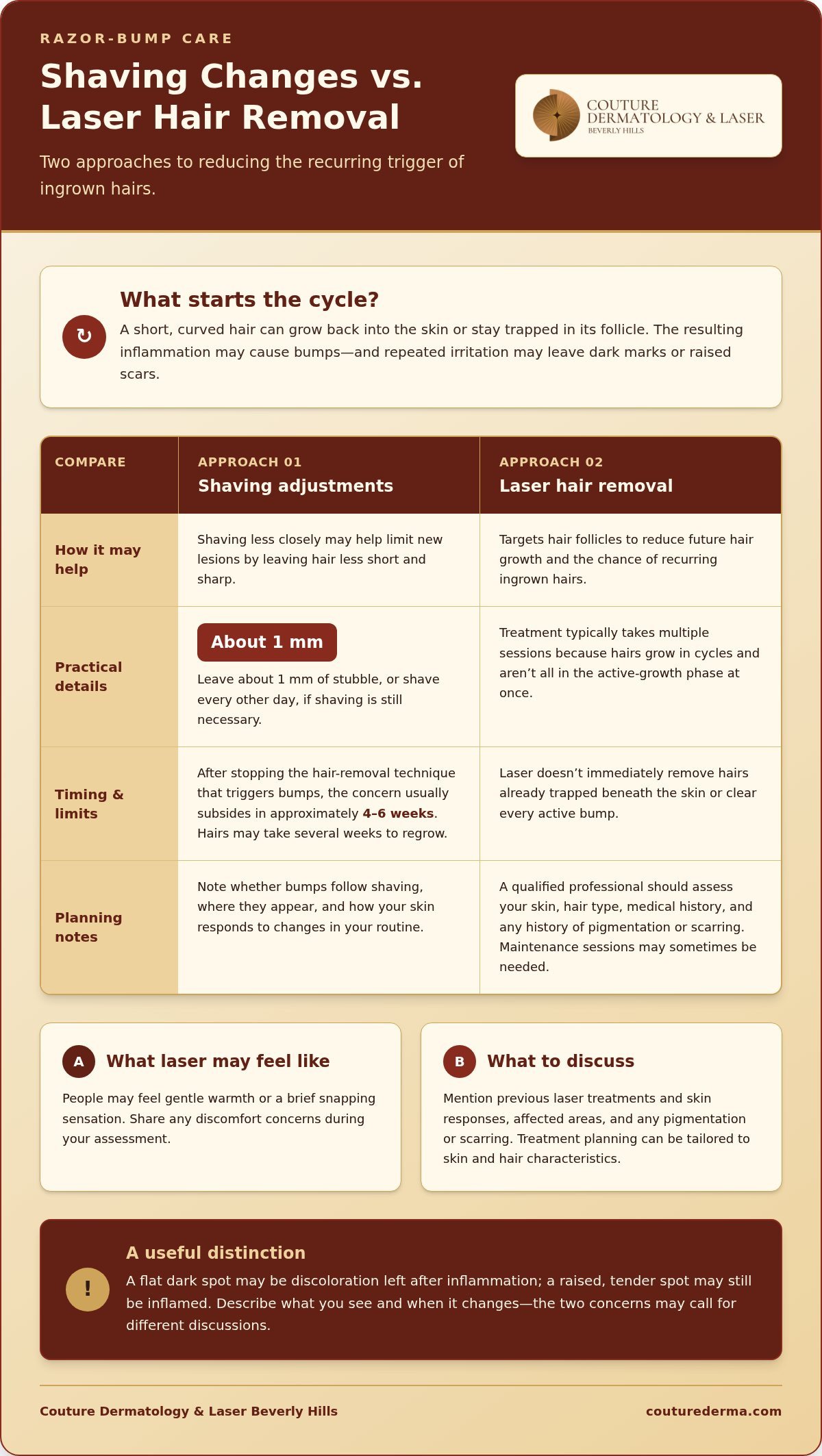
- Shaving less closely, leaving about 1 mm of stubble, and shaving every other day may help limit new bumps.
- Ongoing inflammation can leave dark marks or raised scars, and discoloration may take months or years to fade.
- Plan follow-up care around your skin, hair, and response to treatment; maintenance laser sessions may sometimes be needed.
Laser hair removal for ingrown hairs
Pseudofolliculitis barbae develops when a curved hair grows back into the skin or remains trapped inside its follicle. Laser hair removal can reduce hair growth and the chance of recurring ingrown hairs.
After shaving, a sharp hair tip may pierce nearby skin as it grows, triggering inflammation around the follicle. This can lead to pink bumps or pus-filled spots, sometimes with discomfort. Repeated irritation may leave post-inflammatory hyperpigmentation, or dark marks after inflammation. Curly, coarse, or thick hair can make this cycle more likely.
Hair Removal and Razor Bumps
Laser hair removal targets hair follicles to reduce future growth, which can mean fewer hairs curling back into the skin. This may matter if shaving repeatedly brings new bumps to your face or neck. People researching pseudofolliculitis barbae (razor bumps) laser treatment in Los Angeles often want to know whether it can reduce that recurring trigger. It does not immediately remove hairs already trapped beneath the skin.
Hair-Growth Cycles and Repeat Sessions
Laser sessions target follicles during active growth, but hairs aren’t all in that phase at the same time. Treatment typically involves multiple sessions rather than a single visit. Your hair and skin characteristics help shape the plan. A patch that looks unchanged after one session doesn’t show how the full course will work. Track changes between appointments and discuss them at follow-up.
Choosing a Los Angeles Laser Provider
Choose a qualified professional who assesses your skin, hair type, and medical history before planning laser hair removal. For razor bumps, the assessment should consider any history of pigmentation or scarring as well as the affected areas. Share previous laser treatments and how your skin responded. A trained professional can tailor the approach to different skin tones and hair types.
Laser hair removal can feel like gentle warmth or a brief snapping sensation. Mention any concerns about discomfort during your assessment, and discuss how your skin and hair characteristics inform the plan. Laser treatment may be considered when shaving adjustments and topical creams haven’t helped enough. It reduces hair growth, but doesn’t immediately clear every active bump.
Stopping the hair-removal technique that triggers bumps can help the skin settle. Pseudofolliculitis barbae usually subsides approximately 4-6 weeks after stopping that technique, though hairs may take several weeks to regrow. If shaving remains necessary, leaving about 1 mm of stubble or shaving every other day may help limit new lesions.
Insurance coverage depends on your policy. Ask your insurer whether laser hair removal for pseudofolliculitis barbae is covered under your plan’s medical-necessity benefits.
What Causes Razor Bumps?
When bumps appear after shaving, their pattern matters, not just their color. Pseudofolliculitis barbae is a shaving-related inflammatory skin concern that commonly appears around hair follicles on the face and neck. Note whether spots appear after each shave, stay in one area, or develop elsewhere. That timeline helps distinguish a recurring pattern from an isolated bump.
People with curly, coarse, or thick hair can develop razor bumps, and the concern is more common among African American men. It can affect people of any ethnicity. When describing your symptoms, include the hair-removal method and body area involved. Those details help clarify whether shaving, plucking, or waxing tends to precede a flare.
How the bumps appear
You may see pink raised spots, called papules, or pustules, which are bumps containing pus. They often appear around follicles after shaving, especially on the face or neck. Note whether the area feels tender or painful and whether the spots are flat, raised, or draining. Avoid squeezing them. Instead, note their location and appearance before your appointment.
Razor bumps aren’t limited to the beard. You might notice a similar pattern on the scalp, armpits, bikini area, or groin if you remove hair there. For example, note if bumps appear on your neck after shaving but not in areas where you leave hair alone. Comparing affected and unaffected areas can clarify the timing and trigger.
What your symptom pattern can tell you
Not every mark left after a flare is an active bump. A flat dark spot may be discoloration left behind, while a raised, tender spot may still be inflamed. Describing what changed and when can clarify whether your main concern is current irritation, lingering color, or skin texture. That distinction matters because each concern may call for a different discussion.
Before your visit, write down where the bumps occur, which hair-removal method you used, and whether the area feels uncomfortable. Include past treatments and how your skin responded. If the same region flares repeatedly, describe that pattern, not just the newest spot. These observations give a dermatologist a more useful picture than a close-up of one bump alone.
Treatment options for pseudofolliculitis barbae can include prescription medication, corticosteroid injections, and laser hair removal. A useful discussion starts with what you’re experiencing now: recurring bumps, tenderness, or marks left after a flare. Bring your observations to a dermatology visit and explain which hair-removal habits you want to maintain. That context helps shape a plan around your symptoms and priorities.
Scarring, keloids, and post-inflammatory hyperpigmentation
Repeated razor bumps can leave more than temporary redness. As papules and pustules resolve, inflammation may leave darker discoloration or raised scars. Post-inflammatory hyperpigmentation means dark marks that remain after irritated skin heals. Those marks can take months or years to fade, so ongoing bumps may prolong the visible changes.
Chronic inflammation can also lead to permanent hypertrophic scars, which are raised scars, or keloids, which grow beyond the original injury. For example, a recurring bump along the beard line may heal with a raised mark after repeated irritation. If a spot keeps returning or becomes firm and elevated, have it assessed rather than picking or squeezing it.
Laser treatment can address hair growth and may also affect visible inflammation. The Aerolase laser described for this concern targets hair, while its energy is absorbed by redness and inflammation. This distinction matters: reducing active irritation may help calm a red, inflamed area, but existing dark marks can remain after bumps settle. Laser therapy should not be presented as an instant solution for discoloration.
Redness, or erythema, and brown or gray discoloration are different changes to track. Redness reflects visible inflammation; post-inflammatory hyperpigmentation is pigment left after inflammation. For example, a flat brown mark after a bump differs from a tender, raised lesion that remains active. Note which changes are new and which remain after the bump heals. That description helps guide the treatment discussion.
What can help besides laser treatment?
Alternatives include stopping shaving when possible, adjusting shaving technique, and using prescription medications. Leaving about 1 mm of stubble or shaving every other day may reduce new lesions. Corticosteroid injections usually mitigate inflammation, especially when a bump is swollen and tender. These options address different parts of the problem: shaving changes limit new triggers, while anti-inflammatory therapy targets irritation already present.
For persistent inflammation, discuss whether corticosteroid treatment fits the lesion and your scar history. Injections are one option, and laser-assisted corticosteroid treatment has also been described as a way to avoid shots. A raised scar or suspected keloid needs careful assessment, because chronic irritation can leave lasting texture changes. Don’t treat every dark mark as an active bump.
Keep a simple record of each flare: where it appears, whether it feels tender, and whether it leaves a flat dark mark or raised scar. This distinction helps separate active inflammation from its after-effects. If shaving is the trigger, pausing or modifying hair removal can help prevent new lesions while the skin settles. Addressing fresh bumps early can limit repeated inflammation and further discoloration.
Laser maintenance and follow-up care
After laser hair removal, brief redness can occur, and most patients resume regular activities. Follow-up helps track symptoms and determine whether maintenance care is needed.
Recovery After Treatment
Recovery means observing how treated skin responds after a session, including any redness or discomfort. Note where redness appears and whether it settles or changes. That record gives you and your clinician useful details at follow-up, especially if coarse hair or recurring bumps affect the same area.
If crusts form, warm-water, saline, or Burrows solution compresses can soothe the area and loosen crusts. Apply a compress for 10 minutes, then let the skin rest. Avoid picking at crusts, which can irritate healing skin and contribute to scarring. Follow the aftercare instructions provided for your treatment.
Ongoing Laser Maintenance
Maintenance laser treatment means returning for additional sessions after an initial course if hair growth or razor bumps recur. Some patients may need maintenance sessions, depending on how hair growth and symptoms change over time. Track new bumps between visits, noting whether they appear in previously treated areas or where coarse hair remains.
Laser hair removal may be paired with consistent exfoliation to help manage ingrown hairs. Chemical peels containing glycolic acid, salicylic acid, or lactic acid are examples used in this approach. Because exfoliation can affect irritated skin, discuss the timing and method during consultation rather than adding a peel while the treated area is red or tender.
Follow-Up Care
Follow-up care reviews your skin’s response, remaining symptoms, and next steps after treatment. Bring notes on redness, new bumps, crusting, or discomfort to your consultation. These details help distinguish short-lived redness from persistent irritation and clarify whether your care plan needs adjustment.
Ask how to coordinate exfoliation with laser sessions, especially if your routine includes glycolic, salicylic, or lactic acid. A clear schedule can reduce confusion about which approach to use while your skin settles. If redness persists or symptoms worsen, share that change with your clinician before another session.
For a practical record, write down the treatment date, the area treated, and any changes you notice afterward. Include whether you used a compress and for how long, such as 10 minutes. This simple log makes follow-up more specific and helps guide decisions about maintenance, exfoliation, and the timing of future sessions.
Pseudofolliculitis barbae and razor bumps
Razor bumps are more than ordinary shaving irritation: pseudofolliculitis barbae is an inflammation pattern linked to hair removal. A short, curved hair can grow back into the skin or remain trapped inside its follicle, causing a visible bump. That explains why symptoms often return in the same shaved areas, even when you change shaving products.
The condition affects people of any ethnicity, particularly those with curly or coarse hair. Pseudofolliculitis barbae affects approximately 45-80% of men of African ancestry. That figure describes a reported population pattern, not an individual diagnosis. In dermatology, the useful clue is the combination of hair-removal history and bumps around follicles.
Symptoms can include pink raised spots and pus-filled bumps around follicles on the face or neck after shaving. Some feel painful or tender; others are noticeable mainly because of their appearance. If a bump heals and leaves a flat dark mark, that suggests lingering pigment change. A raised, firm area indicates a different lasting skin change from flat discoloration.
Hair removal can trigger bumps beyond the beard. For example, shaving the scalp or neck, plucking facial hairs, or waxing the groin can precede similar irritation. The location helps explain the pattern, but the shared issue is how the removed hair grows back. Record the method and area before discussing recurring symptoms with a dermatology professional.
Here’s the practical takeaway: focus on preventing fresh lesions, not only clearing marks left by earlier ones. If possible, stop the hair-removal method linked to new bumps; the condition usually subsides approximately 4-6 weeks after stopping it. If you continue shaving, leave about 1 mm of stubble or reduce shaving to every other day. These changes reduce close-shave triggers.
When shaving changes aren’t practical or symptoms continue, treatment options include prescription medications, corticosteroid injections, and laser hair removal. These approaches address different concerns: medication and injections can address inflammation, while laser treatment reduces hair growth. A dermatology assessment considers the affected area, hair type, medical history, and whether your main concern is active bumps, dark marks, or scarring.
Recurring bumps can feel discouraging, especially when each flare seems to leave a lasting reminder. The pattern can offer useful information: note whether lesions follow shaving, plucking, or waxing, and whether they’re painful, flat, or raised. That record helps distinguish active irritation from marks left after healing and supports a more tailored discussion of care.
Couture Dermatology & Laser Beverly Hills: Laser Skin Resurfacing
Couture Dermatology & Laser in Beverly Hills offers Laser Resurfacing for patients concerned about lingering skin texture or marks after razor bumps. Laser Resurfacing is distinct from Laser Hair Removal, which targets hair growth; it should not be presented as a way to prevent new ingrown hairs. If bumps are still active, discuss that concern before considering treatment for marks or texture.
Start by identifying the concern you want addressed: ongoing bumps, discoloration, or changes in skin texture. That distinction helps shape a focused conversation about whether Laser Resurfacing fits your concern and what care makes sense next. Visit couturederma.com to learn more or contact Couture Dermatology & Laser in Beverly Hills.
Choose a Next Step That Fits Your Skin
If you’re considering pseudofolliculitis barbae (razor bumps) laser treatment in Los Angeles, begin with the outcome you want to address. Are new bumps still forming, or are you mainly concerned about marks left behind? That distinction can shape a focused conversation about treatment and follow-up.
Before an appointment, note where bumps appear, which hair-removal methods tend to precede them, and whether you’ve noticed lingering discoloration or raised areas. Also list treatments you’ve already tried. These details make the discussion specific to your experience rather than centered on a one-size-fits-all plan.
In my practice, a thoughtful plan starts with your skin’s current needs and your goals for the next stage of care. Individual responses to treatment vary, so a consultation can help clarify suitable options and what to expect. Arrange a consultation with Couture Dermatology & Laser Beverly Hills when you’re ready to discuss your concerns. A clearer plan can be a reassuring first step toward feeling more comfortable in your skin.
Frequently Asked Questions
What is Pseudofolliculitis Barbae (PFB)?
Pseudofolliculitis barbae, or PFB, is inflammation linked to hairs growing back into or becoming trapped beneath the skin after hair removal. It’s a specific explanation for recurring bumps, not a label for every spot after shaving. If you’re unsure what you’re seeing, note whether bumps follow hair removal and where they appear. Sharing those details can help a dermatologist distinguish PFB from other causes of bumps.
Who is Affected?
Anyone with curly or coarse hair can develop PFB, regardless of ethnicity. The pattern is more common among African American men, but it isn’t exclusive to them or limited to the beard. If you get recurring bumps in an area where you shave, pluck, or wax, note the hair texture and removal method. Those details can help explain why the same area keeps reacting.
Which laser types are safest and most effective for razor bumps on different skin tones?
No single laser is best for every skin tone and hair type. A suitable approach depends on the contrast between hair and surrounding skin, your skin tone, and treatment history. Older laser approaches could burn darker skin because they didn’t distinguish hair from skin pigment well. Medical-grade systems can treat a range of skin tones and hair types when used by trained professionals, with settings selected after assessment.
How many laser treatments are usually needed for pseudofolliculitis barbae, and how often?
Laser treatment typically takes multiple sessions because hair follicles cycle through growth phases, and each session targets follicles in an active phase. The schedule depends on the area treated, hair growth pattern, and your response between visits. Rather than judging the plan by one appointment, track whether new bumps appear and share that change at follow-up. Maintenance sessions may sometimes be needed after the initial course.
What should patients do before and after laser treatment for razor bumps?
Before treatment, share your medical history, skin tone, hair type, previous laser procedures, and any current skin symptoms during the assessment. Afterward, brief redness can occur; warm-water, saline, or Burrows solution compresses may soothe the area. Use a compress for 10 minutes if appropriate, and don’t pick at crusts. Discuss when to resume exfoliation, since chemical peels and laser sessions both affect the treated skin.
What are the risks and side effects of laser treatment for pseudofolliculitis barbae?
Brief redness is a reported short-term effect, and laser treatment may feel like gentle warmth or a brief snap. Skin tone and hair characteristics matter when planning treatment: historical laser approaches could burn darker skin because they couldn’t distinguish hair from skin pigment. A trained professional should assess your skin, hair, and medical history first. Share persistent redness, discomfort, or any unexpected skin change at follow-up.