
You notice your skin feels less firm, and your usual routine isn’t changing its texture. You’re curious about treatments that work with your body rather than simply adding volume. The benefits of regenerative aesthetics include supporting skin quality and natural repair processes, with changes that generally develop gradually.
It’s understandable to want an option that looks refined and still feels like you. But “regenerative” can describe different treatments, and expected results vary by method and skin concern. Here’s what these treatments involve, how options such as platelet-rich plasma and collagen stimulators work, which concerns they may address, and how to think about the evidence. Understanding these distinctions can help you discuss a treatment plan that fits your goals.
Key Takeaways
- Regenerative approaches aim to support skin quality and collagen, while traditional treatments may focus more directly on volume or surface concerns.
- Compare options such as platelet-based treatments and collagen stimulators by how they work and which concern they’re intended to address.
- These treatments may be considered for changes in texture, fine lines, acne scars, or skin laxity; the best fit depends on your goals and skin.
- Expect changes to develop gradually, and remember that results can vary with the treatment method and individual factors.
- Clinical evidence differs across regenerative approaches, so understanding the strength and limits of the evidence can help you weigh your options.
What regenerative treatments are available?
In my practice, I see patients comparing treatments that support skin quality with options that change volume or soften lines. Regenerative approaches aim to influence collagen and the body’s repair processes. The distinction matters: a collagen-focused treatment targets tissue support, while a filler can restore volume in a specific area.
For treatment costs in the United States, the price depends on the treatment type, area treated, and planned sessions. Pricing is determined after a quote request, rather than being one fixed amount for every regenerative approach.
To compare common anti-aging options, watch this overview of their potential benefits and limitations:
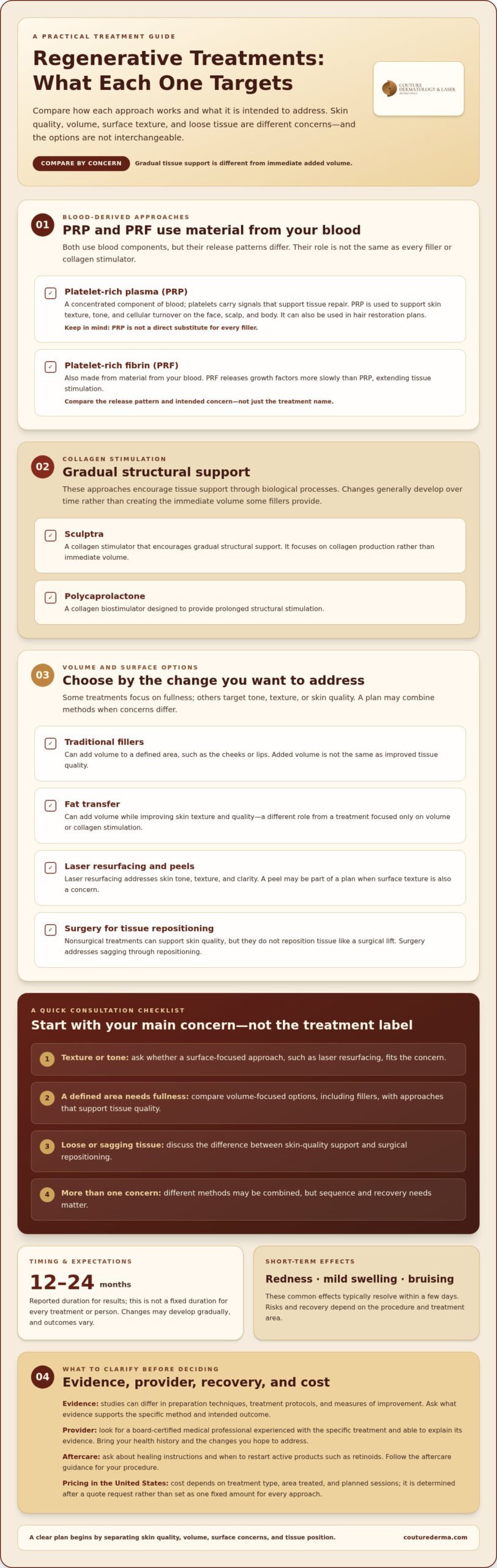
Platelet-rich plasma, or PRP, uses a concentrated component of your blood. Platelets carry signals that support tissue repair, and PRP delivers regenerative signals to enhance skin texture, tone, and cellular turnover for the face, scalp, and body. It can be used in hair restoration plans, but isn’t a direct substitute for every filler.
Platelet-rich fibrin, or PRF, also uses material from your blood. It releases growth factors more slowly than PRP, extending tissue stimulation. Sculptra is a collagen stimulator that encourages gradual structural support. I explain that these treatments work through biological processes, so changes typically emerge over time instead of creating the immediate volume some fillers provide.
Fat transfer has a different role. It can add volume while improving skin texture and quality. Polycaprolactone is another collagen biostimulator, designed to provide prolonged structural stimulation. In a consultation, I consider the treatment area and whether volume or tissue quality is the priority, because these methods aren’t interchangeable.
Traditional fillers can be useful when a defined area needs added volume, such as the cheeks or lips. But volume isn’t the same as improved tissue quality. Sculptra supports gradual collagen production, while laser resurfacing addresses the skin’s tone, texture, and clarity. The right approach depends on the concern each method targets.
Combining treatments can make sense when concerns differ. For example, a plan might pair a collagen-stimulating approach with a peel or laser resurfacing to address surface texture. Fillers may be used selectively to refine volume. Each method works differently, so the sequence and recovery needs matter.
Nonsurgical treatments can support skin quality, but they don’t reposition tissue like a surgical lift. Regenerative methods may complement surgery by improving tissue quality, while surgery addresses sagging through repositioning. If loose skin is your main concern, I discuss that distinction before considering an approach. The plan should reflect the change you want, not just the treatment name.
What is regenerative aesthetics?
In my practice, I describe regenerative aesthetics as treatments intended to improve skin quality by supporting collagen, blood supply, and the body’s healing processes. Rather than focusing only on volume, these approaches aim to influence biological activity in treated tissue. Patients seeking a gradual, natural-looking change often want to understand that distinction before choosing a treatment.
I also talk openly about the limits. Regenerative treatments don’t stop aging, and outcomes can vary with the method, treatment area, and factors such as your biology, age, nutrition, and health. An injectable collagen stimulator works differently from platelet-rich plasma, so I don’t assume they share the same timeline or result.
When a patient compares regenerative treatments with fillers, I clarify the goal first. Fillers add volume, while regenerative approaches focus more on tissue support and skin quality. Reported results typically last 12-24 months, though that isn’t a fixed duration for every treatment or person. Consider whether your priority is texture or fullness; that distinction helps guide the conversation.
Choosing a qualified provider matters. I recommend looking for a board-certified medical professional with experience in the specific treatment and the ability to explain its evidence clearly. A plastic surgeon or dermatologist can assess whether your concern involves skin quality, volume, or tissue position. Bring your health history and list the changes you hope to address.
Patients also ask about side effects. Common short-term effects include redness, mild swelling, or bruising, which typically resolve within a few days. The risks depend on the procedure and treatment area, so I discuss expected healing, aftercare, and possible complications before treatment. Injections and resurfacing, for example, involve different procedures and recovery experiences.
For a natural-looking result, I match the approach to the concern and explain that biological changes develop over time. PRP and PRF use material from your blood, while collagen stimulators prompt tissue to build support. These options don’t suit every concern, and they don’t replace surgery when loose tissue needs repositioning.
At home, consistent care supports your skin’s recovery. Use sunscreen before sun exposure, and follow the aftercare instructions for your procedure. If you use active products such as retinoids, ask when to restart them after treatment. Irritation during healing can complicate recovery and make changes harder to assess.
I also help patients look closely at the evidence for the specific method they’re considering. Studies can vary in preparation techniques, treatment protocols, and measures of improvement, making direct comparisons difficult. Ask what evidence supports the method and intended outcome. That conversation helps distinguish a proposed biological mechanism from results measured in clinical studies.
Skin concerns addressed by regenerative therapies
Regenerative approaches are discussed for changes in skin texture, firmness, and tone. The treatment choice should follow the concern: acne scars call for a different approach than hair thinning or surface discoloration.
Aesthetic Applications and Skin Rejuvenation
Aesthetic skin rejuvenation uses treatments such as microneedling, peels, and laser resurfacing to improve visible skin changes. For you, the distinction is practical: enlarged pores, fine lines, and uneven tone affect the surface differently from laxity or volume loss. Matching the method to the skin symptom helps shape a treatment plan around the result you want, rather than treating every concern the same way.
Acne scars are one example where texture is central. Microneedling and laser resurfacing can be used to improve the appearance of uneven skin, while the approach depends on scar type and skin tone. For a closer look at options for acne scar refinement, consider how the treatment targets the scar’s texture, not just its color.
Radiofrequency microneedling combines tiny controlled injuries with radiofrequency energy. That energy heats deeper tissue, supporting collagen remodeling that can improve texture, skin laxity, and tone. It’s a distinct option for crepey skin or mild looseness, while surface discoloration may call for a peel or laser. The treatment area and concern help determine which technique is relevant.
Regenerative approaches are also used for wrinkles, stretch marks, enlarged pores, and surface discoloration. PRP, or platelet-rich plasma, can be used for crepey under-eye skin and to support hair restoration by stimulating hair follicles. After laser treatment, PRP may also help reduce inflammation and support recovery. These applications target different tissues, so one treatment isn’t a universal solution.
Potential Skin, Hair, and Tissue Benefits
Potential benefits include improvements in skin texture, support for hair follicles, and changes in the quality of treated tissue. PRP is used in hair restoration plans, while collagen-stimulating methods focus on skin support. This range matters if you’re weighing a cosmetic concern alongside hair thinning: the treatment and target area need to fit the outcome you’re seeking, rather than relying on the broad “regenerative” label.
Acne breakouts, rosacea, and other skin conditions also appear in regenerative treatment discussions. These are medical concerns, not simply cosmetic signs of aging, so the treatment goal should be clearly defined. A plan for active breakouts, for example, differs from one for lingering acne scars. A dermatologist can assess the skin symptom and identify whether a regenerative approach fits that specific concern.
For discoloration or uneven tone, treatment selection should account for skin type and the pattern of pigment. A peel, microneedling, or laser may be considered for surface changes, while other concerns call for different care. If your main goal is to restore texture, note where it appears and whether scarring, pores, or fine lines are most visible; those details help focus the discussion.
Evidence strength and clinical validation
Clinical evidence for regenerative aesthetics is developing, but its strength differs by treatment. A systematic review analyzed 147 studies and reported significant improvement for 87% of patients. That finding is encouraging, yet it doesn’t mean every method performs equally or produces the same result for each person. The treatments, protocols, and outcomes measured matter.
For platelet-rich plasma (PRP), one reported measure found patients maintained 70% of initial improvements after 18 months. That figure describes a particular reported outcome, not a universal prediction for every PRP use. Results for hair restoration, under-eye skin, and post-laser recovery involve different concerns, treatment areas, and ways of measuring change.
ClinicalTrials.gov lists 217 studies related to regenerative medicine, including 14 focused specifically on skin applications. Those counts show research activity, not proof that every treatment is established for cosmetic use. For you, the useful distinction is whether a study examines the same material, preparation process, treatment area, and outcome as the procedure being considered.
Comparing research can be difficult. Methods vary in preparation, product characteristics, treatment protocols, and measures of improvement. One study may assess skin elasticity, while another measures wrinkles or patient-reported change. These differences make results harder to compare and can limit how confidently findings apply to your concern.
Exosomes illustrate why the treatment name alone isn’t enough. These tiny particles carry biological signals, but their function can vary with source, manufacturing, and cargo. Evidence for aesthetic use remains largely preclinical and mechanistic, with limited standardization and human data. Ask what evidence supports the specific product and outcome being discussed, rather than relying on broad claims about growth factors or cellular repair.
Clinical evidence also differs among treatment categories. Poly-L-lactic acid has stronger longitudinal and tissue-analysis support among the particulate collagen stimulators reviewed. Polynucleotides, polydeoxyribonucleotide, and extracellular vesicles have plausible biological mechanisms, but clinical findings remain limited and varied. A possible mechanism isn’t the same as a well-established clinical result.
Market growth is another measure, but it shouldn’t be confused with clinical validation. The global medical aesthetics market reached $17.16 billion in 2024 and is projected to grow 12.8% annually through 2030. Demand can increase while treatment evidence continues to develop. A useful next step is to ask how the outcome was measured, how long it was followed, and whether the research matches your treatment plan.
Stronger evidence will require larger comparative trials, consistent preparation methods, and clearer outcome measures. Until then, weigh each option by its specific clinical support, not by how widely it is marketed. This keeps expectations tied to what the evidence actually evaluates.
How regenerative aesthetics works
Regenerative treatments work by encouraging biological activity in targeted tissue, rather than relying only on added volume. Depending on the method, they may signal repair, stimulate collagen, or support the skin’s structural foundation. That process takes time: optimal results typically develop over 2-3 months as the body responds.
With platelet-rich plasma (PRP), platelets release growth factors, which are proteins involved in cell repair and growth. Platelet-rich fibrin (PRF) releases those signals more slowly, extending tissue stimulation. These treatments use components from your own blood, but their purpose and preparation differ. The chosen area and concern guide where the material is placed.
Collagen biostimulators work through a different mechanism. Particles act as temporary scaffolds, prompting a controlled response and gradual remodeling of the extracellular matrix, the supportive network surrounding skin cells. This process can encourage new collagen, mainly types I and III. Rather than creating an instant change in skin quality, it builds support as the tissue responds.
Calcium hydroxylapatite offers both immediate and gradual effects. Its carrier gel provides an initial lifting and support effect after injection, while the microspheres can activate fibroblasts, cells that produce collagen. Reported tissue changes include organized collagen deposition and dermal reinforcement. The distinction matters: the early visual effect and later collagen response come from different parts of the treatment.
Fat transfer uses living cells, including stem cells, that may influence surrounding tissue. It can add volume while supporting skin quality, so it differs from a filler used chiefly to restore fullness. No single mechanism suits every concern. A treatment intended to improve tissue quality won’t reposition loose tissue as surgery can, though regenerative techniques may complement a lift.
For some approaches, a course may involve 2-3 sessions spaced 4-6 weeks apart. The number and spacing depend on the treatment strategy and the area being addressed. Ask how each planned session contributes to the intended result, and whether the goal is texture, collagen support, or volume. That makes the proposed sequence easier to understand.
Because collagen stimulation is gradual, changes may emerge over time rather than immediately. It’s helpful to distinguish the immediate volume provided by fillers from the gradual response associated with collagen stimulation. They’re related to different treatment goals, but they aren’t the same outcome.
Regenerative procedures may enhance rejuvenation, but they aren’t a universal replacement for surgery or other aesthetic treatments. The right plan starts with the concern, then matches the method to the tissue and desired change. If you’d like to discuss a personalized approach, book an appointment to discuss your skin goals.
Couture Dermatology & Laser Beverly Hills: Laser Skin Resurfacing
Couture Dermatology & Laser Beverly Hills offers Laser Skin Resurfacing for concerns involving the skin’s surface, such as texture changes or discoloration. It’s a practical next step when your main goal is surface refinement rather than restoring volume or addressing deeper tissue laxity.
In a treatment discussion, start with the concern you want to address and how it differs from volume loss or expression lines. Dermal and Lip Fillers enhance facial contours and restore volume, while Botox smooths fine lines. Matching the option to your priority helps keep the plan focused and realistic.
If you’d like to explore whether Laser Skin Resurfacing fits your goals, visit couturederma.com.
Choose a next step that fits your skin goals
The most useful next step is to name the change you want to see. Is your priority smoother texture, a refreshed appearance, or softer fine lines? That focus can guide a thoughtful discussion about which approach fits, what it can address, and how it may fit into your broader skin care plan.
At Couture Dermatology & Laser Beverly Hills, options include Laser Skin Resurfacing, Laser Treatment, and Botox. Each addresses a different aesthetic concern, so the conversation can begin with your goals rather than a treatment label. The benefits of regenerative aesthetics are most meaningful when the approach reflects what matters to you and respects the gradual pace of change.
If you’re ready to talk through your priorities and possible next steps, book a visit with Couture Dermatology & Laser Beverly Hills. A clear, considered plan can help you move forward with confidence.
Frequently Asked Questions
Who Makes an Ideal Candidate?
Healthy adults aged 30-65 with realistic goals are commonly described as candidates for regenerative aesthetic treatments. The best fit depends on your skin concern, health history, and whether you’re seeking gradual skin-quality changes or a different kind of correction. For example, someone focused on texture may have different options from someone primarily concerned about volume loss. A medical assessment helps match the treatment to your goals.
How is it different from getting filler or Botox?
Regenerative approaches aim to support tissue quality, while fillers and Botox have different aesthetic roles. Dermal and Lip Fillers enhance facial contours and restore volume; Botox smooths fine lines and prevents new ones. If your main concern is hollowing, a regenerative method may not provide the same immediate fullness as filler. If fine lines are your focus, Botox may be more relevant.
How long do regenerative results last?
Reported regenerative aesthetic results typically last 12-24 months, though the treatment and individual response influence durability. For instance, collagen changes develop gradually, so the visible effect may not have a single clear starting point. Keep a simple record of treatment dates and take photos in consistent lighting. That can help you and your clinician assess changes over time without relying only on memory.
When should someone start?
There’s no single age that suits everyone. Skin collagen production begins to decline at roughly age 25, and some people in their 30s consider preservation-focused options. That doesn’t mean treatment is necessary at a particular age. Start with the concern you notice, such as early texture changes, and consider whether a gradual approach matches your preferences and skin health.
What are the potential benefits of regenerative aesthetic treatments?
Potential benefits include supporting collagen, improving skin texture, and addressing concerns such as acne scars or crepey skin. PRP may also be used to support hair restoration. The specific benefit depends on the method and treatment area; a plan for hair thinning differs from one for facial texture. Before choosing, identify the change you want to address and ask how that treatment targets it.
Which regenerative aesthetic treatments are commonly used?
Commonly discussed options include platelet-rich plasma (PRP), platelet-rich fibrin (PRF), collagen stimulators, microneedling, and radiofrequency microneedling. These names describe different methods, not interchangeable versions of one treatment. For example, microneedling creates controlled micro-injuries, while PRP uses a concentrated component of your blood. Ask which method is intended for your concern and what the treatment involves.
What evidence supports the effectiveness of regenerative aesthetics?
Evidence includes clinical studies reporting improvements in some outcomes, but strength varies across treatments. A review of 147 studies reported significant improvement for 87% of patients; methods and measures differed across the studies. That result shouldn’t be read as a prediction for an individual procedure. Ask whether the evidence evaluates the same treatment method, target area, and outcome you’re considering.
How do regenerative aesthetic treatments compare with traditional cosmetic procedures?
Regenerative treatments generally focus on supporting tissue quality, while other cosmetic options may target a specific visible change, such as added volume or softened fine lines. Nonsurgical methods don’t reposition loose tissue as surgery can. The useful comparison is the goal: skin texture, volume, fine lines, or tissue position. Clarifying that goal helps you understand which category of treatment may address it.