
You spent the last six months rotating through brightening serums, yet those stubborn dark marks refuse to budge. When you finally consider clinical treatments, evaluating picosure vs fraxel for brown skin feels intimidating. In my Beverly Hills practice, I see patients every week who worry that an aggressive laser will trigger severe post-inflammatory hyperpigmentation (PIH, or reactive dark patches).
Your hesitation is completely valid. Melanin-rich skin possesses highly sensitive melanocytes (the specialized cells that produce pigment), meaning excess thermal heat often worsens discoloration instead of clearing it. You deserve a clear, clinically sound treatment plan that addresses hyperpigmentation, melasma, and acne scarring without risking accidental thermal injury.
Below, I will break down the critical difference between picosecond acoustic pressure and fractional thermal heat. As a clinical rule, we typically prep deeper complexions with topical pigment inhibitors for four weeks before any laser session. Here is how both platforms perform, giving you the clarity to tailor the safest path forward for your skin.
Key Takeaways
- Understand why melanin-rich complexions react aggressively to thermal heat, and how active melanocytes (pigment-producing cells) can trigger stubborn rebound darkening.
- Uncover the critical distinctions in picosure vs fraxel for brown skin, contrasting gentle photoacoustic pressure waves against intensive fractional heat columns.
- Learn which laser platform safely clears persistent melasma patches and which option specifically targets indented acne scars without leaving behind dark spots.
- Master the pre-care routine required for deep complexions, including how applying topical pigment blockers for several weeks calms reactive pigment cells before your session.
- Discover the specific questions to ask your specialist during a consultation, including why pre-procedure test spots prevent unexpected tissue reactions.
Why Does Brown Skin React Differently to Aesthetic Laser Treatments?
Melanin gives deeper skin tones their beautiful, radiant warmth. But beneath the surface, that same pigment changes the entire physics of laser medicine. In my practice, I see patients who have been turned away from clinics, or worse, burned by devices built without diverse skin biology in mind.
When comparing picosure vs fraxel for brown skin, we must first look at cellular mechanics. Melanin-rich skin does not simply have more melanocytes (the specialized cells that produce skin pigment); instead, those cells are larger and more reactive. When exposed to heat, they switch on protective mechanisms that rapidly lead to discoloration or permanent mottled patches.
We classify deeper tones using the Fitzpatrick skin phototyping system, specifically focusing on types IV through VI. In these phototypes, delivering laser energy requires the precision of haute couture tailoring. You cannot use a generic setting; the energy must be measured to the millimeter to protect your epidermal barrier (the delicate outer layer of skin).
How Does Melanin Absorb Heat During Laser Therapy?
Lasers seek out specific targets called chromophores (pigment, water, or blood vessels). In melanin-rich complexions, melanosomes (the tiny structures that package and carry pigment) sit densely within the outer layer of skin. These particles eagerly soak up light energy, acting as unintended shields that catch heat before it reaches deeper tissue layers.
When uncontrolled thermal energy diffuses into surrounding tissue, the skin overheats quickly. That excess heat shocks your pigment cells, leading to stubborn rebound pigment. Here is a practical rule I share during consultations: safeguarding the epidermal melanin cap determines every single laser wavelength selection we make at our Beverly Hills clinic.
What Is Post-Inflammatory Hyperpigmentation and Why Is the Risk Higher?
Post-inflammatory hyperpigmentation (PIH) is your skin’s emergency response to trauma, resulting in flat, darkened patches. Thermal stress triggers inflammatory cascades (chemical distress signals) that instruct melanocytes to flood the injured area with extra melanin. For brown skin, even minor superficial burns or lingering redness can transform into dark marks that persist for months.
To safely navigate picosure vs fraxel for brown skin, our primary clinical goal is minimizing thermal dwell time (the duration heat lingers in the skin). Before any laser procedure, I advise patients to apply a broad-spectrum mineral sunscreen every morning 15 minutes before sun exposure. This simple barrier step prevents baseline cellular inflammation before we ever introduce therapeutic laser light.
PicoSure vs Fraxel: What Are the Key Mechanical Differences?
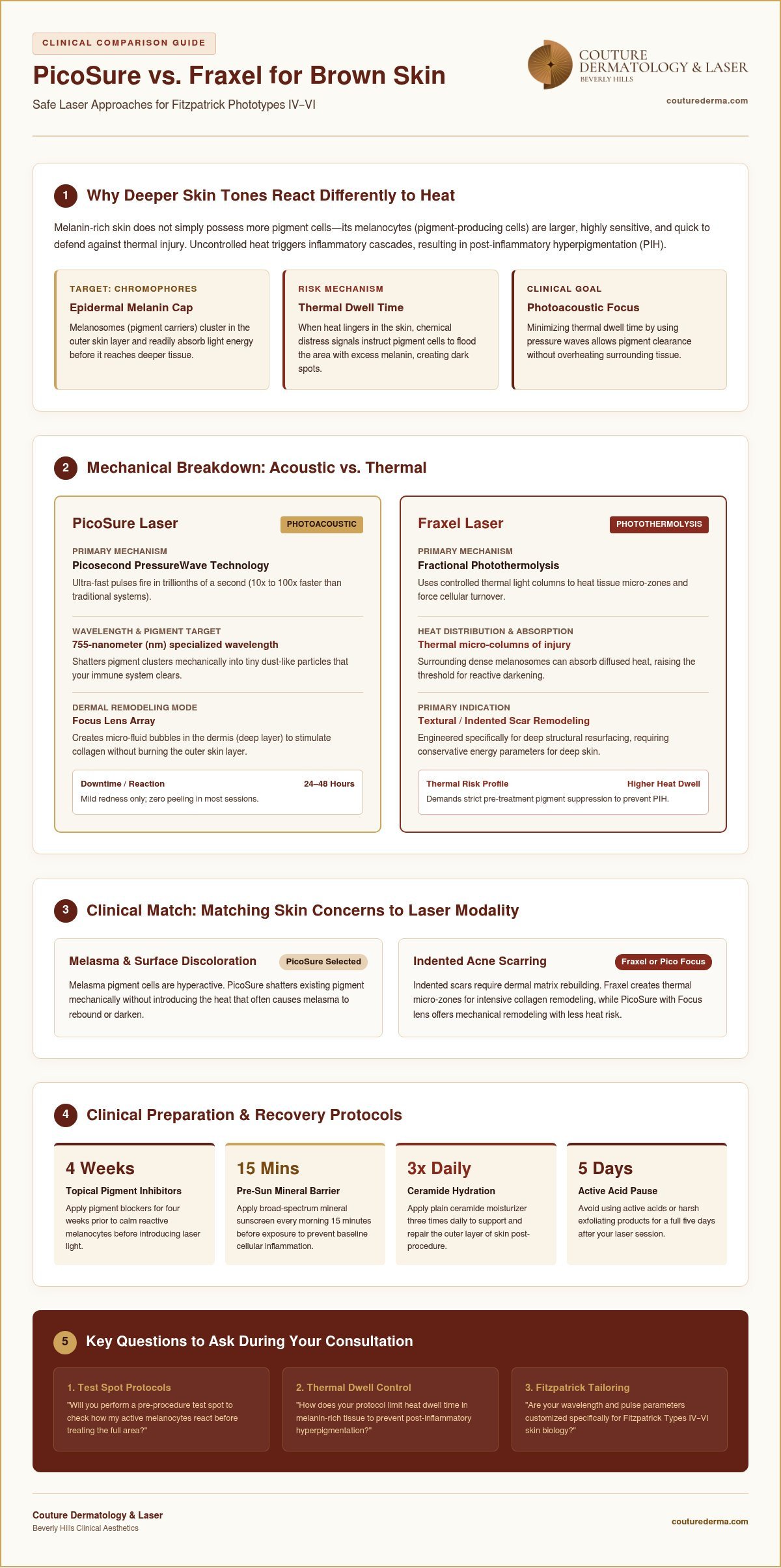
To understand picosure vs fraxel for brown skin, picture the contrast between acoustic soundwaves and thermal heat. One device breaks down pigment mechanically, while the other delivers heat to force cellular turnover. That single mechanical distinction changes everything for melanin-rich tissue.
PicoSure relies on picosecond PressureWave technology, firing ultra-fast pulses in trillionths of a second. Fraxel relies on fractional photothermolysis (using light energy to create microscopic columns of heated tissue). Picosecond delivery is roughly 10 to 100 times faster than older systems, converting light directly into photoacoustic pressure before heat has a chance to spread.
How Does PicoSure Work on Melanin-Rich Complexions?
PicoSure delivers a specialized 755-nanometer wavelength that targets excess melanin directly. Instead of heating the pigment, it hits dark spots with mechanical force, shattering pigment clusters into tiny dust-like particles. Your immune system then clears away these micro-fragments naturally over the following weeks.
When we attach the specialized Focus lens array, it stimulates fresh collagen by creating microscopic fluid bubbles under the surface. This process renovates the dermis (the deep, structural layer of skin) without burning the outer layer of skin. In my practice, I see patients achieve clear, radiant skin texture with only 24 to 48 hours of mild redness and zero peeling.
Here is an actionable post-care tip: apply a plain ceramide moisturizer three times daily and avoid using active acids for a full five days after your session.
How Does Fraxel Operate and Where Does Heat Go?
Fraxel takes an entirely different route. It uses non-ablative wavelengths (1550-nanometer erbium or 1927-nanometer thulium) that target water inside your skin cells rather than melanin. By creating narrow thermal injuries deep in the tissue, it compels the body to build firmer skin from the inside out.
The challenge for brown skin is where that heat travels. Those microscopic thermal zones stimulate collagen, but the residual heat also diffuses outward into neighboring melanocytes. If energy levels are set too high, that trapped heat can provoke stubborn post-inflammatory dark marks. While we incorporate selective fractional techniques into tailored acne scar refinement protocols, settings must remain conservative.
If you are debating picosure vs fraxel for brown skin and feel unsure which energy matches your goals, you can schedule a personalized laser consultation to design a safe, tailored treatment roadmap.
PicoSure vs Fraxel for Brown Skin: Which Wins?
Choosing between these two technologies comes down to your primary aesthetic goal. Are you battling stubborn discoloration, or are you trying to smooth deep, textural indentations? In my practice, matching the correct energy source to your specific tissue pattern prevents the dreaded cycle of laser-induced darkening.
When evaluating picosure vs fraxel for brown skin, clinical differences become immediately obvious:
| Treatment Metric | PicoSure (Picosecond) | Fraxel DUAL (Fractional Thermal) |
|---|---|---|
| Core Energy Mechanism | Photoacoustic pressure waves (minimal heat) | Fractional photothermolysis (controlled heat) |
| PIH Risk (Fitzpatrick IV-VI) | Very low (spares surface melanocytes) | Moderate to high (requires strict pre-conditioning) |
| Expected Recovery Time | 24 to 48 hours of mild pinkness | 5 to 7 days of bronzing and flaking |
| Prime Indication | Melasma, sun spots, pigment clearing | Deep textural scars, severe surgical scarring |
Which Laser Safely Treats Melasma and Hormonal Hyperpigmentation?
PicoSure wins decisively here. Melasma (a patchy, hormone-influenced pigment condition) flares aggressively when heated. Because Fraxel dumps thermal energy into the dermis, it frequently causes dramatic pigment rebound in melanin-rich patients. PicoSure breaks apart melanosomes using acoustic soundwaves instead of heat, keeping reactive cells tranquil while clearing the complexion.
Here is an essential clinical tip: apply an iron oxide-tinted mineral sunscreen every single morning. Iron oxides protect against high-energy visible (HEV) blue light, which directly stimulates pigment cells in deeper complexions.
Which Device Delivers Superior Results for Acne Scars in Darker Skin?
This decision requires nuance. Atrophic rolling scars (indented marks caused by lost collagen) often demand aggressive remodeling. Fraxel 1550 nm creates deep thermal injuries that force new collagen formation, but it carries a higher risk of post-treatment discoloration. In experienced hands, conservative fractional passes work well, but many patients prefer safer alternatives.
PicoSure paired with a diffractive focus lens creates localized microscopic pressure pockets inside the dermis. This non-thermal remodeling stimulates fresh collagen without cooking the surface. You can learn more about how we tailor these gentle technologies in our specialized acne scar refinement protocols.
What Should You Expect Regarding Downtime and Healing?
Recovery schedules highlight another stark contrast. Following a PicoSure session, you will typically experience 24 to 48 hours of mild flushing, similar to a light windburn. You can comfortably return to your normal routine the next morning without peeling or crusted skin.
Fraxel demands significantly more social downtime. You should anticipate five to seven days of rough, sandpaper-like texture and bronzing (tiny dots of dead pigment shedding from the surface). For busy schedules, acoustic picosecond energy offers an elegant, low-risk alternative that respects your calendar and your skin barrier.
How Should You Prepare and Protect Brown Skin Before and After Laser?
Preparing your tissue isn’t an optional suggestion; it’s the foundation of safe laser medicine. When we evaluate picosure vs fraxel for brown skin, the best clinical outcomes typically start weeks before you ever step into the procedure room. Rushing into treatment without adequate skin prep on melanin-rich tissue frequently invites irritation and unwanted pigment flare-ups.
What Topical Ingredients Calm Melanocytes Before Treatment?
In my practice, preparing the skin canvas for four weeks ensures predictable, uniform energy absorption. We prime your tissue using topical tyrosinase inhibitors (compounds that block the key enzyme responsible for melanin production). Ingredients like prescription azelaic acid, tranexamic acid, kojic acid, or compounded hydroquinone effectively quiet overactive pigment cells before light energy touches your face.
Here’s a specific nighttime protocol: wash with a gentle, non-stripping cleanser, wait 20 minutes after cleansing before applying active pigment inhibitors to skin, and follow with a basic hydrator. This short pause prevents unnecessary irritation caused by damp absorption. And pause all retinoids and chemical exfoliating acids five to seven days prior to your laser session to protect your outer layer of skin.
What Is the Essential Post-Laser Healing Routine?
After your procedure, your primary goal is defending the moisture barrier while keeping inflammation at bay. Apply pure ceramide creams or soothing recovery balms twice daily to support continuous tissue repair. And let’s be honest about temptation: avoid picking, scratching, or scrubbing at flaking skin or tiny micro-crusts, because friction often triggers dark spots almost immediately.
Diligent sun defense remains vital throughout recovery. Reapply a broad-spectrum zinc oxide mineral sunscreen 15 minutes before sun exposure, and wear a wide-brimmed hat whenever you’re outdoors. When navigating picosure vs fraxel for brown skin, disciplined post-care makes all the difference in your final aesthetic outcome.
If over-the-counter brightening serums have failed after 8 to 12 weeks of faithful use, you don’t have to navigate stubborn discoloration alone. You can schedule a consultation at our Beverly Hills clinic to tailor a clinically safe, physician-led treatment plan.
What Questions Must You Ask Before Booking a Laser Consultation?
Stepping into an aesthetic clinic can feel intimidating, especially when you carry the fear of laser burns or rebound darkening. When evaluating picosure vs fraxel for brown skin, the clinician operating the device matters just as much as the wavelength itself. An expert provider evaluates your unique tissue depth and pigment risks long before turning on the device.
In most cases, I recommend requesting a test spot on a discreet area, such as along your jawline or behind your ear, at least one to two weeks before a full treatment. This crucial trial run reveals exactly how your melanocytes react to the energy level without risking your entire face. It’s often the most reliable way to prevent surprises.
Why Is Board-Certified Expertise Non-Negotiable for Skin of Color?
Operating energy-based devices on deeper complexions demands an intimate grasp of cutaneous optics (how laser light interacts with tissue) and histology (the microscopic cellular anatomy of skin). In inexperienced hands, aggressive settings can trigger stubborn burns or mottled patches. Board-certified dermatologists quickly recognize early signs of subclinical inflammation (hidden irritation beneath the surface) that standard technicians easily miss.
During your initial consultation, ask your provider how frequently they treat Fitzpatrick types IV through VI. Inquire about the device’s built-in cooling mechanisms, such as continuous chilled air, which prevent surface thermal burns. If a practitioner cannot explain how they plan to protect your epidermal melanin, that is typically your signal to seek care elsewhere.
How Does Couture Dermatology & Laser Beverly Hills Personalize Every Laser Session?
At our Beverly Hills practice, we reject one-size-fits-all treatments. We approach laser resurfacing much like fine bespoke tailoring, calibrating fluence (the amount of energy delivered per unit area), spot size, and pulse frequency to your individual genetics and lifestyle. Dr. Chinonso Abisogun pairs Harvard-trained medical rigor with 15 years of dedicated experience treating diverse complexions safely.
Whether your skin condition calls for the mechanical pressure of PicoSure or a conservative fractional approach, we guide your care with patience and precision. You don’t have to accept hyperpigmentation as an expected outcome of laser therapy. If you’re ready for a clear, refined complexion without the risk of thermal injury, book your bespoke consultation online with Dr. Abisogun today.
Designing Your Bespoke Path to Clear, Radiant Skin
Navigating picosure vs fraxel for brown skin ultimately comes down to understanding your tissue biology. For hormonal melasma and stubborn surface pigment, picosecond acoustic energy consistently offers the safest clearance without provoking rebound dark spots. When addressing indented scars, cautious collagen remodeling requires disciplined pre-treatment priming and an uncompromising eye for safety.
True skin transformation isn’t about rushing into the strongest treatment available; it’s about curating a thoughtful protocol that respects your skin barrier. At our Beverly Hills clinic, I combine 15 years of specialized clinical experience with Harvard-trained, board-certified dermatological precision to protect melanin-rich complexions. Equipped with advanced picosecond and resurfacing platforms, we tailor every pulse to fit your exact tone and texture goals.
You don’t have to navigate stubborn discoloration with guesswork and worry. With the right clinical partnership, healthy, luminous skin is entirely within reach. When you feel ready to begin, book your bespoke laser consultation with Dr. Abisogun and let us craft a treatment plan designed specifically for you.
Frequently Asked Questions
Is PicoSure completely safe for dark and brown skin tones?
PicoSure is considered very safe for deeper skin phototypes when operated by an experienced provider, though no medical procedure is completely without risk. Its picosecond PressureWave delivery converts light into mechanical energy rather than bulk thermal heat. That acoustic action shatters pigment while sparing sensitive melanocytes (cells that produce skin pigment). In our Los Angeles practice, we customize fluence and pulse rate specifically to ensure brown skin remains cool, calm, and protected throughout treatment.
Can Fraxel laser cause permanent hyperpigmentation or scarring on brown skin?
Fraxel can induce lasting hyperpigmentation or scarring on deeper skin if high heat accumulates or if energy settings are calibrated too aggressively. Non-ablative fractional resurfacing creates microscopic heat channels in tissue, which easily overstimulates reactive pigment cells. When assessing picosure vs fraxel for brown skin, Fraxel requires far more caution. If you consider fractional resurfacing, ensure your dermatologist uses conservative settings, prepares your skin barrier beforehand, and applies careful cooling throughout the session.
Which laser is better for treating stubborn melasma on deeper complexions?
PicoSure is significantly better and safer than Fraxel for treating melasma on deeper complexions. Melasma is notoriously heat-intolerant, meaning thermal lasers like Fraxel frequently provoke aggressive rebound hyperpigmentation. PicoSure bypasses thermal heating by clearing pigment with rapid acoustic soundwaves. At Couture Dermatology in Beverly Hills, we often combine picosecond technology with targeted medical dermatology treatments, stabilizing hormone-driven melasma without exciting dormant pigment cells.
How many PicoSure sessions are typically needed to clear dark spots in brown skin?
Most patients typically need three to five sessions spaced three to six weeks apart to see optimal pigment clearance. Because brown skin requires lower energy settings to protect melanocytes, pigment clearance occurs gradually rather than overnight. During each appointment, acoustic waves break down isolated clusters of pigment into fine particles that your lymphatic system flushes out. We usually assess pigment lightening at week four to adjust your ongoing treatment parameters.
Can I undergo laser skin resurfacing if I have active acne breakouts?
You should not undergo fractional laser skin resurfacing across areas with active, inflamed acne papules or cysts. Firing laser energy over active acne can spread bacteria, worsen cutaneous inflammation, and sharply increase post-inflammatory dark marks. In my practice, we first stabilize active breakouts using medical dermatology treatments or gentle topical therapies. Once your acne clears, we safely proceed with laser resurfacing to smooth textural scars and clear lingering spots.
What should I do immediately if my skin turns darker after a laser session?
Contact your treating dermatologist right away and halt all exfoliating acids, scrubs, and retinoids immediately. When evaluating picosure vs fraxel for brown skin outcomes, early darkening usually represents transient post-inflammatory hyperpigmentation. Keep your skin hydrated with a plain ceramide moisturizer, avoid picking, and apply broad-spectrum mineral sunscreen every morning. Your dermatologist can prescribe short-term topical anti-inflammatory creams and pigment inhibitors to calm overactive melanocytes before the pigment settles deep within the dermis.
Is a patch test necessary before getting PicoSure or Fraxel on darker skin?
Yes, a patch test is an invaluable clinical step before committing to full-face laser treatment on brown skin. We place one or two laser pulses on a discreet area, such as beneath the jawline, and evaluate your healing response over 7 to 14 days. This quick test shows us exactly how your melanin-rich tissue tolerates the chosen energy levels, virtually eliminating unexpected blistering, prolonged redness, or delayed rebound darkening across visible areas.